



Our Biggest 2025 Wins for Food, Water, and Climate in the Courts

Published Jan 21, 2026
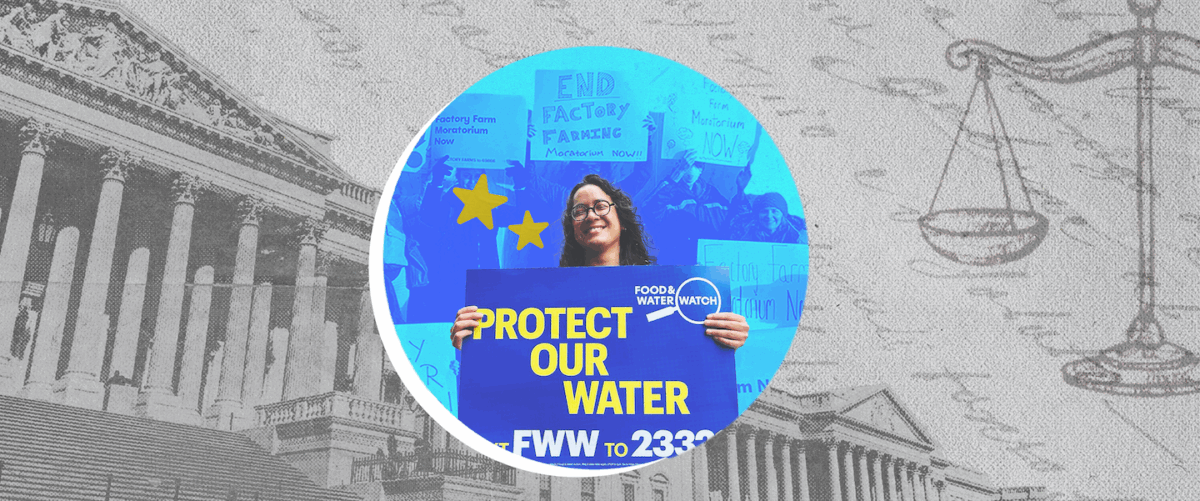
When it comes to protecting our health and environment, the law is an indispensable tool. Learn how our legal team won major victories in 2025!
Food & Water Watch lawyers take on hard-hitting lawsuits to hold polluters and the government accountable. And with their relentless dedication and smart strategy, they’ve made huge strides in the fight for clean water, safe food, and a livable climate.
With the second Trump administration’s blatantly illegal attacks on our shared resources, this work is more important than ever. With your investment in this work, we’ve made major progress despite Trump’s pro-polluter agenda. Here are just some of the biggest legal wins that you powered in 2025!
1. Pushing EPA to Monitor Microplastics in Our Drinking Water
In December 2024, we petitioned the Environmental Protection Agency (EPA) to start monitoring microplastics in our drinking water, joined by 175 allied organizations. Our legal team also identified a little-known provision in the Safe Drinking Water Act that says if seven governors petition EPA to monitor for a contaminant like microplastics, the agency must do so or explain why monitoring for other contaminants is more urgent.
This was the foundation of our campaign to pressure seven governors to submit that petition. Late last year, our work paid off, as seven governors petitioned EPA for microplastics monitoring. This is an exciting and essential first step toward addressing the growing public health crisis of microplastics in our drinking water. Now, EPA must grant these petitions and include microplastics in its upcoming Unregulated Contaminant Monitoring Rule.
2. Holding Factory Farms Accountable for Their Water Pollution
Last year, we won two important victories for state factory farm water pollution permits. In March, we won stronger monitoring requirements and transparency in Washington state’s permit. Then, after six years in court, we won several key improvements to Michigan’s permit that will keep more toxic factory farm pollution out of waterways, while defending those improvements from industry group challenges.
These wins built off our 2021 precedent-setting victory to hold factory farms accountable for their pollution. A federal court ruled in our favor that the Idaho water pollution permit for factory farms must include monitoring requirements. Besides improving the Idaho permit, this decision also strengthened the case for monitoring requirements in state permits across the country.
Communities and regulators need and deserve to know just how much pollution these facilities release. Limits on pollution mean nothing if you can’t enforce them. Since then, we’ve built on this win to advocate for stronger permits across the country, from Colorado to Montana, Oregon to Minnesota.
3. Defending Lake Erie From Factory Farm Pollution
Factory farm pollution is a main driver of the toxic algal blooms that have increasingly plagued Lake Erie. But EPA’s plan to fix this problem fails to address factory farms’ role.
In late 2024, we moved to intervene in a legal case challenging this plan. And in July, the Court granted our motion. We can now share our expertise on EPA’s regulatory failings in the case, which will have important implications for Lake Erie and for factory farm regulation nationwide. At the same time, the court denied motions to intervene from industry groups.
As the case progresses, we’ll argue in favor of a new clean-up plan that actually addresses factory farm pollution and protects water quality in Lake Erie.
4. Improving Protections Against Big Oil’s Toxic Pollution
The Clean Water Act requires EPA to review its water pollution standards for various industries every year and determine if revisions are needed. As pollution control technology improves, EPA is supposed to set more protective standards.
But for decades, the agency failed to update pollution standards for several petrochemical industries, including fertilizers and plastics. This has allowed Big Oil and related industries to dump billions of gallons of toxic pollutants in U.S. waterways every year. So in 2023, we sued EPA.
In June, a federal court agreed with our coalition that EPA’s failure to update these standards was unlawful. The court required the agency to reconsider its standards and consider the latest pollution control technologies going forward. This is an important victory that will reduce dangerous pollution from thousands of fertilizer, plastics, and other polluting facilities across the country.
5. Defending Wetlands and Farmer Conservation Programs
In a win against corporate landowners and the Project 2025 agenda, we successfully defended a federal conservation program as intervenors in a federal court attack on wetlands.
The Swampbuster program has been an important source of support for farmers for decades, allowing them to trade wetlands conservation for USDA benefits like crop insurance. The court resoundingly rejected this industry-orchestrated attack on Swampbuster’s constitutionality, agreeing with every argument we made.
Now, given the Supreme Court and Trump’s attacks on wetland protections, the Swampbuster program is even more important for vital wetland ecosystems. Notably, the court’s decision not only preserved the program; it also maintained the legality of other vital federal programs that encourage actions to prevent soil erosion.
6. Keeping Fish Farms Out of Our Oceans
In March of 2025, we solidified a major coalition victory challenging a blanket permit for offshore industrial aquaculture (fish farming) operations. By authorizing Nationwide Permit 56, the Army Corps of Engineers threatened to fast-track the expansion of this brand-new and dangerous industry, without properly assessing the possible harms.
We know that these fish factories pose huge threats to ecosystems and release massive amounts of pollution into our oceans. In March, a federal court sided with us and overturned the permit entirely. Now, the environmental impacts of these facilities must be properly assessed one by one.
From the Courts to the Streets, We’ll Continue Winning in 2026!
Now more than ever, the law is an essential tool for protecting our shared resources. With your support, we’re taking regulators and polluters to task for failing their duty to our health and environment.
The first Trump administration showed us the importance of an all-sides approach to stop the worst of its policies. With our strategic and dedicated legal efforts working hand-in-hand with people power, we can still win protections for our food, water, and climate. And that’s thanks to dedicated people like you who power our work!
Together, we’ll keep working in the courts to defend our livable future, in 2026 and beyond.
Your generosity powers our legal victories!
Enjoyed this article?
Sign up for updates.
TO TOP