



Thinking About Water with Painter Fredericka Foster
Published Apr 16, 2026
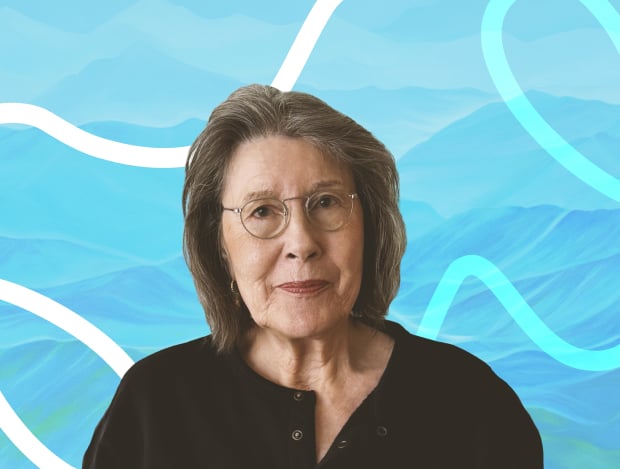
In this interview, we sit down with our 2026 benefit honoree, oil painter Fredericka Foster, to discuss art, nature, and activism.
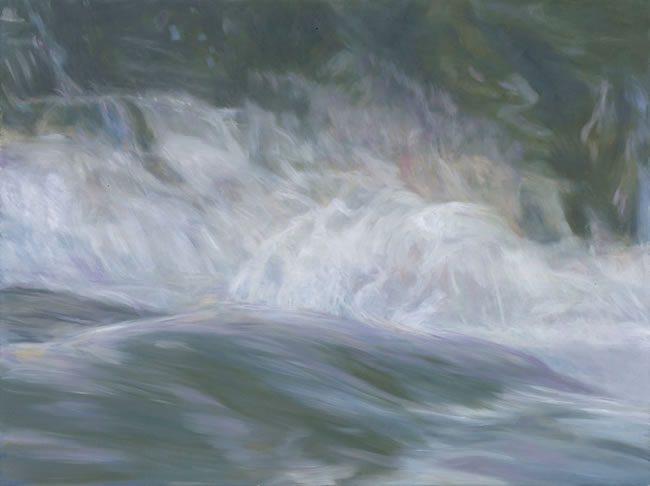
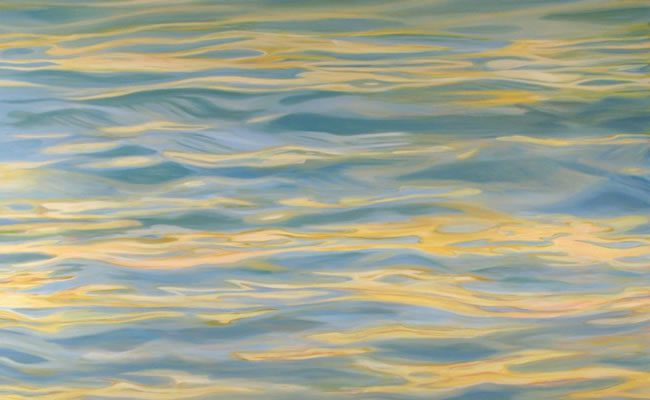
When you look at Fredericka Foster’s Bay Diptych, you can hear the water move. You can see the light dance and slide across the surface. You can feel the rhythm of it in your bones, in your chest, in your heart.
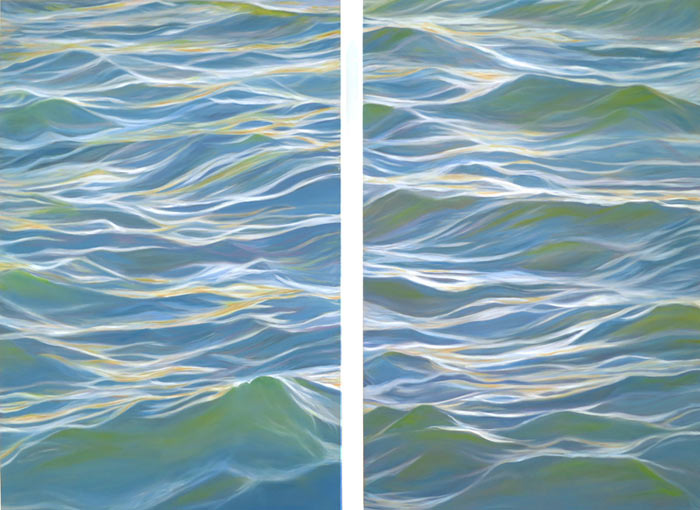
Fredericka is an oil painter whose works help cultivate our relationship with and love of water and raise awareness of water’s environmental and cultural impact. She’s also the founder of Think About Water, an international artist and activist collective whose works celebrate and defend water.
This year, we’re celebrating Fredericka and her work at Against All Odds, our annual benefit to protect the planet. Ahead of the April 29 event, we sat down with Fredericka to talk about the importance of water and how she intertwines her art with activism. This interview has been edited for clarity and length.
What drives your passion for environmentalism and water as a subject matter in your art?
Since I was a tiny child, I’ve related to nature very intimately. I had friends who were trees; I still have friends who are trees. I’ve never felt separate from nature, so to me it’s a very intimate thing, environmentalism. For me, taking care of nature is like cleaning my floor or washing my face.
When I started painting water, I had come home to my subject matter because I was raised in Seattle, Washington, surrounded by water. I spent my life on the water. So when I moved to New York, with access to NYC Museums, I realized that a painting of water could return me to my natural state. Standing in front of these images of water, I would feel my whole being slow down in the same way that I did when I was looking at real water — and I could return to a natural state of profound respect.
Hear more from Fredericka at Against All Odds! Join us in New York City on April 29 at 6 p.m.
How did you first get involved with Food & Water Watch?
I guest-curated an exhibition, “The Value of Water,” that completely filled the Cathedral of St. John the Divine in New York. We brought in 200 works of art by 40 artists, and we filled every inch of that cathedral. And it was at this event that I realized art could affect the environment.
Two thousand people came to an event during the exhibition where Food & Water Watch spoke about fracking.1At the time, Food & Water Watch was leading a campaign to ban fracking statewide in New York, in great part to protect the state’s beloved waterways from fracking pollution. As I was looking at the stage, I saw all these people, all these politicians. I looked behind me; there were 40 tables filled with water activists. I realized that it was the exhibition that created the space for all these people to gather.
And at that moment, I thought, This is it. We are going to have an effect on the water quality of New York state, and this meeting will be a crucial part of that.
What makes you proud of working with Food & Water Watch?
When I grew up, public utilities were public utilities, not private companies. And I believe very strongly that these resources need to be in the hands of the public. Food & Water Watch is one of the few organizations really advocating for that.
And I like the community involvement. A lot of the projects that I have done have been in order to involve the community in thinking about water, because that’s where change is actually going to take place. I appreciate that Food & Water Watch works at the community level.
What impact has your art had that you’re most proud of?
I’ve heard from people in phone calls and in writing saying, “I thought the forms in your painting were imaginary, that you were making them up. But I saw them in real water, and now I realize water is alive.”
When someone sees my water is alive, it just thrills me because that’s my experience of water. When I look at water, I experience the life in water and the water in myself. When you feel that, when you get that sense of life, then I think you love water, and you’re going to take care of what you love.
Why is it important to bring art into the activism space?
We learn every single day what we need to do for the environment at a systematic, rational level, and yet it doesn’t happen because we haven’t connected emotionally to the subject. But when you add art, art directly targets the heart.
So that sense of connection that people feel when they, for example, sit beside water in a water exhibition, or when you have them draw or paint water, or share their experience of water in their childhood, that creates intimacy. That creates connections between people. And it’s through those connections that we’re going to create change.
What advice do you have for people who are looking for inspiration and hope in these troubled times?
The first thing we need to do is to watch our own minds. Meditation or prayer are easy ways to do this, because we need stability to deal with the overwrought voices that have overtaken public discourse.
Make friends with a tree and watch that tree grow for a year. Plant something. Join together in community, get involved in your community — that will keep your inspiration and your sense of the positive nature of life.
Find an issue that you care passionately about. There will be other people out there who care about that, too — support each other. I think that’s the most important thing. Get to know your neighbors and find out who you’re living around, so that when there’s trouble, you can gather together.
The primary thing that gives me hope for the future is the young people. I feel that they are turning away from some of the worst excesses of our society. I know a lot of young people are becoming farmers, and I think this is just fantastic.
The other thing that gives me hope is that nature is one with us. I once spoke to a group of talented seniors, and afterwards, one of them said, “You’re the first person who has ever told us that nature cared about us, too.” It’s the truth. We are not separate from nature. And it can lead us; nature will tell us what needs to be done. We just have to listen.
Read about our other honorees, filmmaker Matt Wechsler and hand weaver Susan Weltman.
Enjoyed this article?
Sign up for updates.
TO TOP
Endnotes