



The Young Activists Fighting for a Livable Future
Published Sep 14, 2026
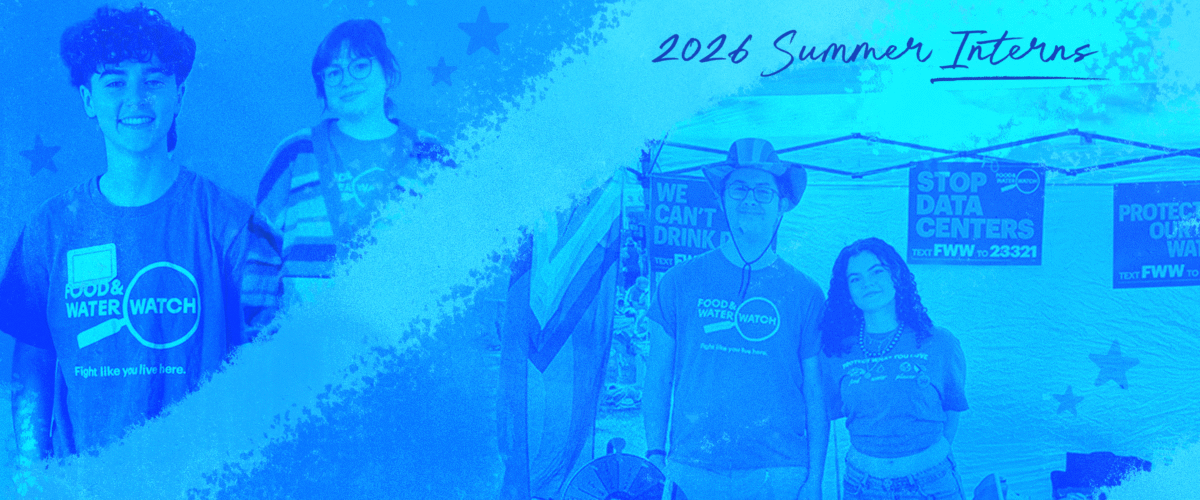
Food & Water Watch interns are opposing data centers, fighting for clean water, and building power in their communities. Learn more about their work!
At Food & Water Watch, building political power to protect our food, water, and climate is central to our work. We’re fighting for a livable future for everyone — so it only makes sense that young activists are playing a crucial role in this work.
With the support of members like you, Food & Water Watch has revitalized and expanded our summer internship program. This year, nine interns joined our organizing teams from coast to coast to hone skills and learn new ones.
They’ve knocked on doors, met with legislators, strengthened relationships with allies, and more. They’ve taken on Big Ag’s pollution and protected our water and climate from Big Tech’s data centers. And they’re organizing in the communities they love and making real improvements in people’s lives.
Learn more about the interns and their work below!
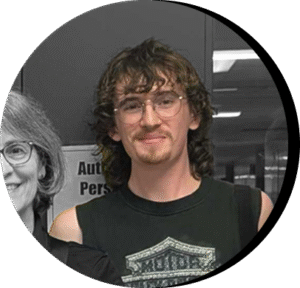
Meet Owen!
Lehigh County, PA
In Lehigh County, PA, caring about nature and the environment crosses political lines, especially in the wake of pollution from dirty industries. Owen knows this firsthand — he lives near the Lehigh Gap, a Superfund site that has been restored through decades of work. This summer, he joined Food & Water Watch to stop a new extractive industry from invading the Lehigh Valley: Big Tech’s AI data centers.
Owen says:
This summer, we’ve been working to stop Project Atlas in South Whitehall and the Emaus Ave data center in Allentown. We’re also trying to build a data center opposition coalition with other grassroots organizations in the Lehigh Valley to pool our resources and share our knowledge.
Seeing the progress there has been very promising and hopeful. Sometimes it feels like the work is all on you, when really we have entire communities who are just as engaged as we are, we just might not know about it. Coalition-building helps bring us all together.
I think often us young people are discounted, even as people say “Your generation has to be the one to fix the world!” But in this internship, I’ve gotten to be seen as an equal and as someone whose experience and insight has value. I’ve made lots of connections in the community and people know me now for my work. It’s nice to feel like a presence and person of value in my community.
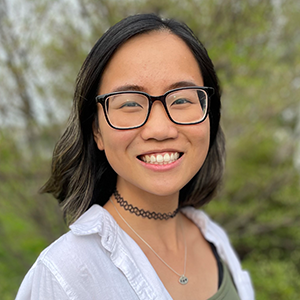
Meet Clare!
Westchester, NY
When Clare first joined Food & Water Watch as a volunteer, she joined the fight to stop an expansion of the Algonquin pipeline. The pipeline ran right behind her home in Westchester, New York. As an intern, she joined our work to stop data centers in the Hudson Valley, including successful fights to stop data centers in Orangeburg and East Fishkill.
Clare says:
I feel like I have a deeper understanding of the environmental movement from meeting Food & Water Watch staff, from being on those weekly organizing meetings and keeping up with what’s going on around the country, but also from meeting people in my local community. I’m meeting lifelong activists who have been consistently showing up for the majority of their lives, and hearing what that’s been like.
The internship has taught me the importance of preparation when it comes to motivating others to take action. You need to really hone in on your communication skills, how to relate to people, how to read people. You want to prepare for that, know who you’re meeting, have your points ready. And when you’re actually trying to rally people, you want to instill a sense of urgency — but you don’t want to make it feel dire so people give up trying. You want people to feel powerful. It’s all about finding that balance.
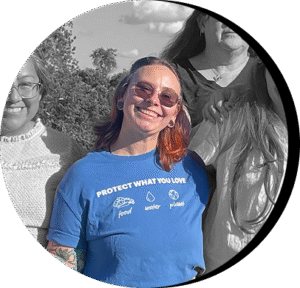
Meet Keelee!
Des Moines, IA
Des Moines, like much of Iowa, faces a drinking water crisis. Nitrates largely from industrial agriculture have made beloved rivers unswimmable and strained the city’s state-of-the-art nitrate removal system, leading to lawn watering bans. Clean drinking water is not always a guarantee. In Des Moines, Keelee worked with our Iowa team to push for action on clean water and connect with grassroots allies.
Keelee says:
What I’ve appreciated most about working with Food & Water Watch this year is how fully they embody their mission. Like water itself, the work touches every facet of our community — fluid and adaptable to whatever form is needed.
Water meets every aspect of our lives and touches everything, from the nurses in the hospital system to the school systems. So a lot of our work this summer has been building community and foundations with other groups in Iowa. For example, in June, we marched alongside UnityPoint nurses demanding fair contracts and compensation that reflects their vital service.
The state of the world gets really scary. Working with Food & Water Watch makes it feel more real, so it’s a lot scarier, but it also feels like I have more power. It makes me feel more hopeful, especially when I get to talk to the diversity of people who are involved with Food & Water Watch.
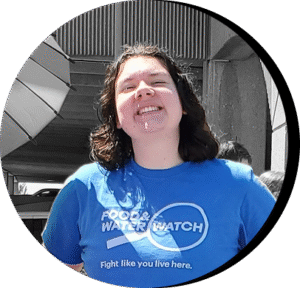
Meet Evelyn!
Iowa City, IA
Evelyn joined the Food & Water Watch Iowa team for her second summer to continue the fight for clean water. Iowa is second in the nation for cancer incidence, and the water crisis has touched everyone. In the past two years, Evelyn’s efforts have been crucial to expanding our work and changing the conversation around clean water.
Evelyn says:
Compared to last summer, I’ve seen so much more awareness in Iowa of water quality. That made me feel like my work last summer was absolutely worth it. It’s becoming more notable in press coverage both statewide and nationally, especially because the Iowa cancer rates are really eye-opening and irrefutable.
Through my experiences at Food & Water Watch, I’ve learned that the most important thing about organizing and engaging with people is empathy and communication. No one wants bad water that’s giving them cancer. No matter their beliefs, their political stance, everyone benefits from clean water. Leading from a place of empathy, especially for people who are maybe opposed to our issues, has been really useful and important.
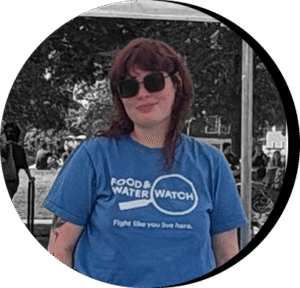
Meet Olivia!
Portland, OR
In Oregon, factory farm pollution has led to the state’s own drinking water crisis. Along with polluting the water with dangerous nitrates, the state’s factory farms have long been allowed to draw on precious groundwater resources with impunity. This summer, among other campaigns, Olivia worked with our Oregon team to build power ahead of the 2027 legislative session, where we’ll fight to ensure factory farms can’t use more than their fair share of Oregon’s groundwater
Olivia says:
My interest in political work started partially from an internship I had last year in the Oregon Senate. There, I worked with some lobbyists and got to sit in on meetings. Now, with this internship, I was really excited to see the other side of change and how people can come together and organize.
One thing I really appreciate about Food & Water Watch is that a lot of times, the work environmental groups do is framed as an urban vs. rural thing, with people coming in and legislating the small farmer without actually knowing what they’re experiencing.
But at Food & Water Watch, we work with small farmers, not against them. We work in coalition with farmers and the communities impacted. So collecting petitions, speaking to people who are experiencing these things, and hearing why it matters to them — it’s really rewarding to see the work that we’re doing is appreciated by the people impacted by it.
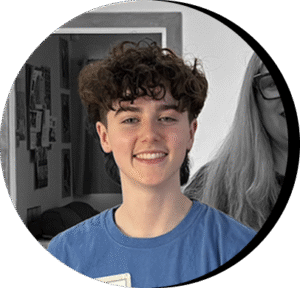
Meet Bella!
Bay Area, CA
In the Bay Area, Big Tech is a powerful force in politics. But the region has also become a place of powerful grassroots resistance against data centers, which Bay Area intern Bella helped to strengthen during her summer with Food & Water Watch. Bella also joined our efforts to Make Polluters Pay by advancing the state’s Climate Superfund Act and to stop dangerous carbon capture scam projects in California.
Says Bella:
I really enjoyed getting to be there for the Bay Area California volunteer meeting at the start of my internship. I got to help draft and set up a presentation on data centers and the various campaigns and strategies we can use in that space. It was really validating to connect with volunteers in-person and get them involved in petitioning opportunities.
In this internship, I’m learning more about coalitions and their role — how they work, their power. I’ve been seeing that a lot with the data center work. There are a lot of different groups of people who are concerned about this proliferation for various reasons. We’re figuring out how and where to collaborate and work on pushing policy together.
Meet Gabriela!
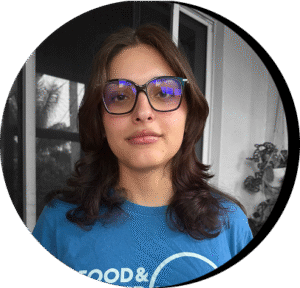
Miramar, FL
In Florida, as in many places, energy affordability and climate change are inextricable. The state’s utilities have raised rates to some of the highest in the nation. At the same time, they’re clinging to expensive, climate-wrecking fossil fuels. In South Florida, Gabriela has grown our campaign and helped make clean, affordable energy a central issue in Florida politics.
Says Gabriela:
After working in legislative politics, I feel like elected officials often use climate as an issue they don’t take seriously. I would always see elected officials talk about fighting climate change, but nothing else after that. Food & Water Watch has really been putting the work in to make climate not just a conversation topic, but to actually push the topic to the House and Senate floor for votes.
This summer, I’ve been working to get elected officials to pledge to fight for affordable energy and reforming the Public Service Commission, and collecting petition signatures from their constituents.
Conversations with those constituents have really shown me that this isn’t a left or right issue. People across the state are paying higher utility bills. People are getting their power turned off, people can’t afford to turn on their air conditioning when it’s 100 degrees in South Florida. Seeing everybody being connected by this issue was eye-opening.
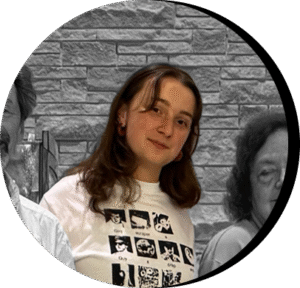
Meet Zoe!
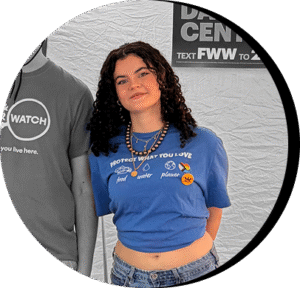
Albuquerque, NM
New Mexico has been a key target for the tech industry and its AI data centers. Oracle’s Project Jupiter in Doña Ana County is planned to be one of the country’s largest yet. However, the project has faced powerful pushback from grassroots activists and groups, including Food & Water Watch. This summer, Zoe Lamb worked in her home city of Albuquerque to harness anti-data center energy into action.
Zoe says:
My mom grew up in a rural town in New Mexico five minutes away from a reservation, so she saw how things like uranium mines negatively impacted the environment and marginalized communities. I always knew our state tended to be one that companies took from rather than provided to, and that got me into fighting data centers.
One of my favorite parts of the work is getting to talk to constituents, especially during tabling. The most memorable event from this summer was Santa Fe Pride. At one point, we had six clipboards out, and there were still lines for people to sign our petition. It was really amazing — we got to see this celebration of love in a very trying time in our American politics, while also uniting under a completely different message for environmental policy and opposing an AI data center.
Meet Kerry!
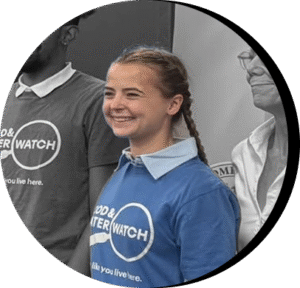
Baltimore, MD
In recent years, Marylanders have watched data centers take over the neighboring state of Virginia. Now, they’re ready to stop the industry’s expansion into the Old Line State. Our fights there are gaining steam — many Maryland counties issued data center moratoriums, and Kerry and our Maryland team turned their efforts toward a statewide moratorium.
Kerry says:
What sets Food & Water Watch apart as an environmental organization is that it focuses a lot more on the community impacts. For example, with data centers, they talk about the water, the pollutants, and how all of that’s going to impact the environment. But they also talk about how it’s going to stress the power grid, and raise bills, and how it isn’t economically contributing to the community.
During the internship, we focused a lot on Montgomery County to try and get a two-year data center moratorium passed. We were invited to a press conference where the County Executive at the time signed a six-month moratorium. Then we also attended a meeting where County officials agreed on an 18-month moratorium, and we felt we had a really big part in that.
The team made tons of phone calls, sent emails, networked with other groups, and talked with Councilmembers. We turned a lot of “No’s” — ”No, we’re not doing a moratorium” — into “Yes’s” through the power of the community. It was a great moment where I got to see that all the messages I left and all the emails I sent had this large impact that helped protect the community.
Thank You for Powering the Next Generation of Activists!
From advocating to their legislators to educating their communities, Food & Water Watch interns are learning by doing. This summer, they made invaluable contributions to our collective fight for a livable future. Food & Water Watch is proud of their work and excited for the bright futures ahead of them.
Thank you to all of our generous donors who invested in this program and in Food & Water Watch interns this year. And thank you to Owen, Clare, Keelee, Evelyn, Olivia, Bella, Gabriela, Zoe, and Kerry for their dedication and work!
Make a gift to power the fight for our food, water, and climate!
Enjoyed this article?
Sign up for updates.
TO TOP