



Why Are Florida Energy Bills So Damn High?


Published Apr 21, 2026
Florida regulators are rubber stamping rate hikes that pass more of our dollars onto energy company shareholders. State leaders must stand up for Floridians.
Did you know that Florida is the hottest state in the nation? Yet, not everyone can afford to cool their homes or even keep the lights on. Why is that? In the last five years, Floridians have been inundated with soaring electricity bills that continue to go up annually. We have Governor Ron DeSantis’ board of utility regulators to thank for that.
The state’s governor-appointed utility regulators should be protecting us from the corporate greed that drives our bills higher. But instead, they’ve given corporate utility companies free rein to squeeze Floridians on their electric bills. These utilities are more concerned with returns to their shareholders than providing affordable energy to their customers.
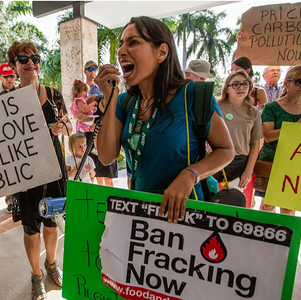
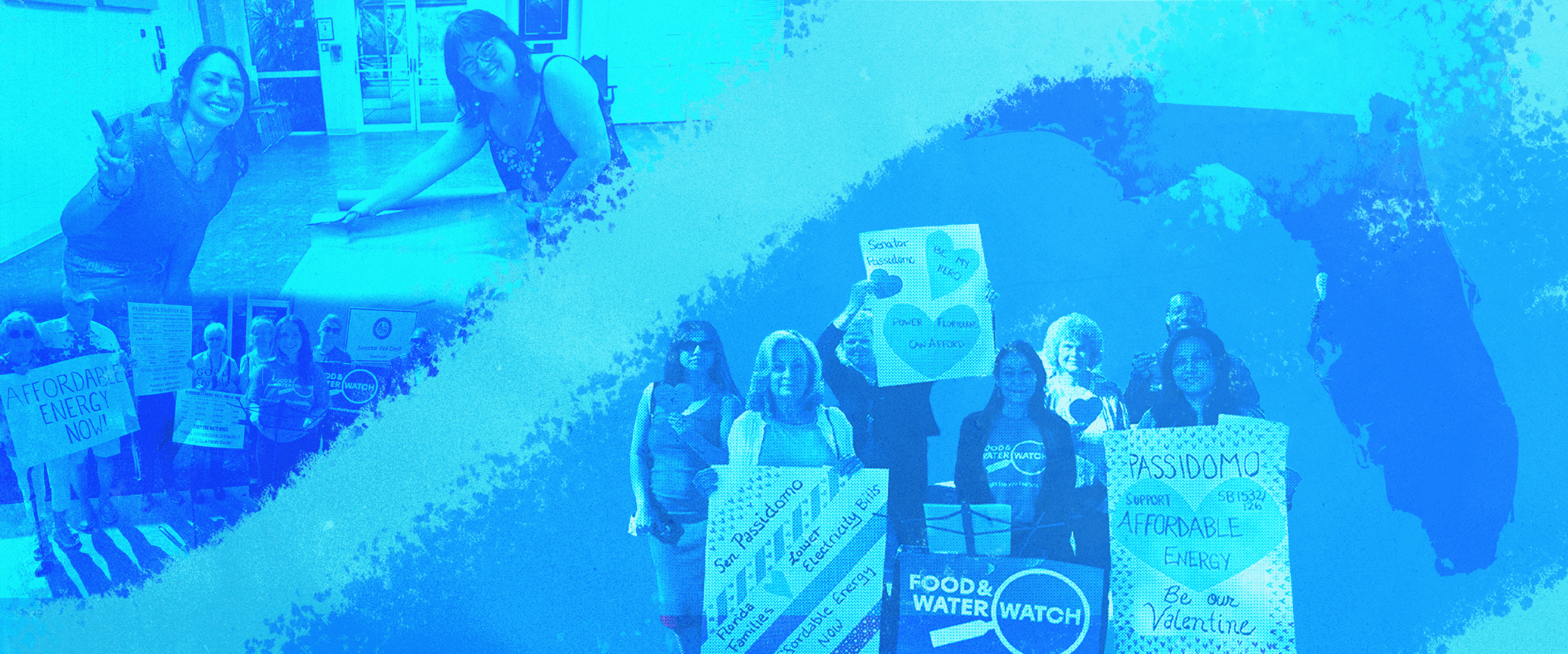
For the past several years, Food & Water Watch has joined grassroots groups in Florida to demand affordable energy reform. It’s a call that has been met with growing support from residents, small businesses, and elected officials. And while state lawmakers have failed to heed that call this year, our movement is gaining momentum that our leaders can’t afford to ignore.
How Corporate Greed Raises Power Bills in the Sunshine State
Florida has a utility regulatory body, called the Public Service Commission (PSC), that should balance the interests of residents and utility companies. That’s not what’s been playing out.
Governor Ron DeSantis’ PSC has rubber-stamped rate hike after rate hike, sometimes with few questions asked. As a result, Florida rate hikes have largely outpaced the national average and are contributing to a wide-reaching affordability crisis. Nearly half of Floridians struggle to make ends meet.
Food & Water Watch dug into Florida’s three largest corporate electric utilities to quantify the rate increases. Our research shows that between December 2020 and January 2026, the PSC approved increasing Florida utility bills by:
- 86% — $980 more for the average Tampa Electric (TECO) customer
- 49% — $747 more for the average Duke Energy customer
- 45% — $511 more for the average Florida Power & Light (FPL) customer
Much of that money is going to corporate profits. TECO pointed to its record profits last year as a direct result of its 2024 rate hike. Last month, a new study found that electric utilities in the Southeast have high profit margins. The study reported that FPL has the highest profit margin of all utilities surveyed in 2025. About 27.4 cents of every dollar go toward corporate profit. For TECO, that figure is at 19.5 cents, and for Duke it’s at 16.8 cents. And these profit margins aren’t flying under the radar — they’re something utility regulators have approved.
In greenlighting FPL’s most recent rate hike, regulators also okayed a 10.95% return on equity, a measure of how efficiently a company generates profit for shareholders. According to Florida’s Office of Public Counsel (OPC), which represents the people of Florida in utility-related matters, this new return on equity is the largest in the contiguous United States. OPC also called it “unconscionable” and pointed out that it will allow FPL “to transfer even more customer cash to shareholders.”
In Florida, higher bills mean more customer dollars headed straight to shareholders’ pockets.
Florida Legislature Fails Their Constituents on Energy Affordability
Despite affordability being top of mind for the majority of Florida voters, the legislature largely failed to rein in corporate greed during the 2026 state legislative session. Lawmakers introduced three bills to address high electricity bills, to no avail.
Bills introduced by Rep. Alex Andrade (R-2) and Sens. Don Gaetz (R-1) and Carlos Guillermo Smith (D-17) would have placed guardrails on what rate hikes utility regulators can approve, which would help to lower power bills over the long term.
Sen. Guillermo Smith’s Affordable Energy Reform Act, endorsed by Food & Water Watch, goes further. It would cap a utility company’s return on equity and promote energy efficiency standards (lower energy use = lower energy bills).
Ultimately, none of these bills advanced through the committee process. Even though affordability is a top concern for Floridians, utility companies are powerful in Tallahassee, and their lobbying dollars have sway.
Dirty Energy Makes Our Power More Expensive
Lax utility regulation isn’t the only thing raising our power bills. Fossil fuels — on top of being bad for our health and our climate — are also bad for our wallets. As it stands, Florida is stuck on gas. As of last year, FPL’s energy mix consisted of 72% natural gas; TECO’s was 89%, and Duke’s was 81%.
Why? One big reason is that utilities can make more profit from gas than renewables like solar and wind. The more money they spend on expensive infrastructure like pipelines and gas plants, the more they can pocket as profit. Corporate utilities have no incentive to change course to cheaper renewables. That’s why we need policy to force their hand.
Moreover, a fossil fuel reliance holds Florida ratepayers hostage to the swings of the volatile global gas market. Not to mention these same fossil fuels are driving worsening climate disasters, like Hurricanes Helene and Milton. Utility companies can charge us for the costs of storm recovery, driving up our bills even more.
Floridians have been boxed into using fossil fuels without access to alternatives. The state’s energy monopoly has a tight grip on where residents can get energy and from what sources. And the companies have worked hard to stifle any opposition.
Florida needs to embrace affordable, resilient renewables. Instead, the legislature is thwarting those efforts at our expense. Literally.
Florida Lawmakers Must Champion People Over Profits!
While good legislation failed to pass, that doesn’t mean the bills are dead and gone forever. Our work has created momentum that we’ll build on all year. Until lawmakers return to Tallahassee next March, we’ll continue holding our elected officials accountable.
Food & Water Watch is calling on elected officials like House Speaker-elect Sam Garrison (R-11), House Speaker Daniel Perez (R-116), Senate-President Elect Jim Boyd (R-20), Sen. Kathleen Passidomo (R-28), and Rep. Lauren Melo (R-82) to champion affordable energy for residents and small businesses.
The call is resonating. In Southwest Florida, 27 small businesses signed onto a letter urging legislators to prioritize affordable energy. In Tampa, Food & Water Watch and partners packed a room full of 50 residents for a community discussion on electricity bills. Our work persists because affordability is a year-round demand.
Without public buy-in from our lawmakers who have the power to make change, utility corporations will continue to unfairly profit off of our hard-earned dollars. Championing energy affordability is a winning issue. Every Floridian needs electricity to survive and thrive.
We’ve made it clear to state leaders what they must do to ensure affordability. Now it’s time for them to take up the mantle. Every elected official, local and state alike, must vocally support the change we need to ensure every Floridian can get the energy they need at prices they can afford. And they can do so by signing our pledge for affordable energy reform.
Floridians, tell your state legislators: “We need affordable energy reform now!”
Enjoyed this article?
Sign up for updates.
TO TOP