



This Farm Bill Is For Corporations, Not Farmers or Families

Published Mar 9, 2026
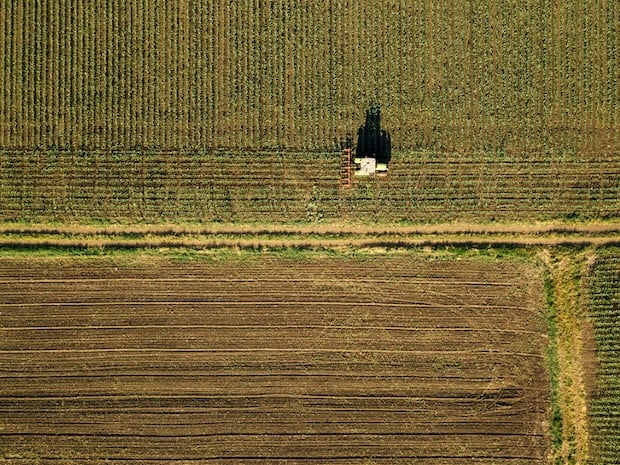
After devastating farmers, families, and rural communities with Trump’s Big Ugly Bill, Congressional Republicans are doubling down on Big Ag handouts with their proposed Farm Bill.
This week, House Republicans, joined by seven Democrats, passed a disastrous Farm Bill draft out of the Agriculture Committee. It’s bad: the House’s Farm Bill will do nothing to mitigate the affordability or environmental crises facing American farmers and consumers.
Instead, it doubles down on the Big Ugly Bill’s devastating SNAP cuts, cuts conservation funding to create a slush fund for Trump’s trade wars, uses energy and conservation funding to promote polluting factory farm gas, and caves to the desires of Big Ag and pesticide corporations.
Forever Changing the Farm Bill: Trump’s Big, Ugly Bill
The Farm Bill is supposed to be the nation’s biggest package of food and agriculture legislation. It’s also supposed to be passed every five years. However, the 2018 Farm Bill has been extended three times, falling victim to partisan politicking and Trump’s campaign to shrink government spending.
And now, the opportunity to pass a fair Farm Bill for consumers, farmers, and the environment has been forever changed by the passage of Trump’s Big Ugly Bill (H.R. 1).
Let’s recap: the Big Ugly Bill exacerbated the affordability crisis, harmed rural communities and the environment, and handed ultra-rich corporations another massive payday. By incorporating the Farm Bill’s two foundational pillars — farm safety net programs and the Supplemental Nutrition Assistance Program (SNAP) — it fundamentally changed “Farm Bill math.”
Instead of delivering relief for our families and communities, the Big Ugly Bill boosted taxpayer-funded farm subsidies for the largest agribusinesses by an estimated $54 billion over the next 10 years.
It also enacted the largest cut to SNAP in history, reducing its funding by $187 billion through 2034. Additionally, it changed SNAP eligibility rules, including expanded work requirements that may result in 2.4 million people losing benefits every month between now and 2034. It fundamentally altered SNAP’s financing structure in a way that could push some states to withdraw from the program entirely.
House Republicans’ Farm Bill Fails Farmers, Families, and the Environment
As the impacts of the Big Ugly Bill hit us hard, Congress has turned to the Farm Bill. On February 13, 2026, the House Agriculture Committee Chairman introduced Congressional Republicans’ proposal, the Farm, Food, and National Security Act of 2026. On March 5, 2026, seven Democrats joined Republicans to advance this bill out of the House Agriculture Committee, getting it one step closer to the House floor.
Let’s be clear: A fair Farm Bill can be a powerful policy lever to support small and mid-sized farmers, rural communities, and consumers. But this proposal isn’t that. It would instead only weaken environmental protections and further tilt the playing field toward Big Ag. Here’s how:
The Farm Bill MAHA-ifies a Gutted SNAP
Although this Farm Bill would be the perfect opportunity to reverse the Big Ugly Bill’s devastating SNAP cuts, it ignores them entirely. Instead, it throws a bone to the meat-obsessed MAHA crowd in a way that will likely make Americans sicker.
The proposed Farm Bill reinforces Trump’s unscientific Dietary Guidelines’ recommendation to significantly increase meat consumption by designating animal protein as a SNAP incentive food. This designation would allow retailers to offer discounts and bonus benefits for meat products purchased with SNAP dollars. By elevating meat to a SNAP incentive food and encouraging increased meat consumption, the bill bolsters the polluting factory farm system that produces the majority of meat in the US.
The Farm Bill Uses Conservation Funds to Support Trade Wars
This Farm Bill would also drain pivotal conservation funding, cutting more than $1 billion earmarked for the Environmental Quality Incentives Program (EQIP) in the next five years.
Already, far more farmers apply for this program than it can support. But rather than expand a popular program that benefits water, soil, and small farmers, Congressional Republicans have proposed to weaken it — in part to cover for Trump’s tariff chaos.
House Republicans are redirecting dedicated EQIP funds to other conservation programs and to the Conservation Credit Corporation, which the USDA can then send to other programs. That includes bailouts to offset the impacts of Trump’s chaotic tariffs.
When Trump’s tariffs triggered trade wars that took a bite out of farmer incomes, the Administration sent huge bailouts (which disproportionately benefit Big Ag) — including a recent $12 billion bridge payment. Farmers should not have to sacrifice their access to conservation funding in the name of subsidizing Trump’s trade wars.
The Farm Bill Promotes Polluting Factory Farm Gas
Factory farms already receive massive subsidies to build digesters that turn their waste into polluting methane gas. The growth of this costly factory farm “biogas” industry is driving more and bigger factory farms — and their resulting pollution.
Recently, the USDA even paused loan guarantees for digesters under the Rural Energy for America Program, citing the financial risk these digesters pose to taxpayers. Nevertheless, in a baffling move, Republicans’ proposed Farm Bill doubles the maximum loan guarantee for digesters from $25 to $50 million.
At the same time, it makes digesters eligible for increased EQIP funding. This directly conflicts with the original purpose of EQIP to fund technologies that protect our water, air, and soil. It also directs funds away from real conservation technologies and further entrenches industrial agriculture.
The Farm Bill Protects Big Ag and Pesticide Companies
House Republicans’ Farm Bill also includes key “poison pill” provisions. These provisions shield pesticide companies, silence cancer patients, and threaten local democracy.
One section of the Farm Bill would create federal “uniformity” in pesticide labeling requirements, effectively stopping states from mandating stronger health and safety warnings on pesticide products. It also attempts to shield pesticide corporations from health-related lawsuits filed by thousands of people with cancer, Parkinson’s disease, or other health issues linked to pesticide use. Many House members have already rejected this industry ploy.
The bill also repackages the EATS Act, which overrides many food, animal welfare, and environmental protections by gutting states’ right to set standards for numerous agricultural products sold within their borders. This section would effectively trample voter-approved regulations, prioritizing the interests of Big Ag over states’ rights and consumer choice.
Including both provisions makes clear that this Farm Bill favors corporate agribusiness interests over farmers, consumers, public health, and local decision-making.
Tell Congress to Reject This Industry-Driven Farm Bill!
This week, the disastrous Farm Bill moved out of the House Agriculture Committee and is on its way to the House floor for consideration. Representatives must put their constituents first and reject this blatant handout to Big Ag and pesticide corporations.
If passed by the House, this Farm Bill will move to the Senate, but this proposal should be dead on arrival. A Farm Bill that ignores devastating SNAP cuts, weakens vital conservation programs, subsidizes factory farms, and shields pesticide corporations from accountability betrays the Farm Bill’s purpose — serving farmers, consumers, and rural communities.
The Farm Bill should support small and mid-sized farmers, protect our environment, strengthen rural communities, and ensure every family can afford healthy food. Congress must reject this industry-driven proposal and instead pass a fair Farm Bill that puts farmers, consumers, and the public interest first
Tell your Members of Congress to support a Fair Farm Bill, not handouts for Big Ag!
Enjoyed this article?
Sign up for updates.
TO TOP