



Data Centers and Carbon Capture: A Dangerous Alliance


Published Sep 25, 2026
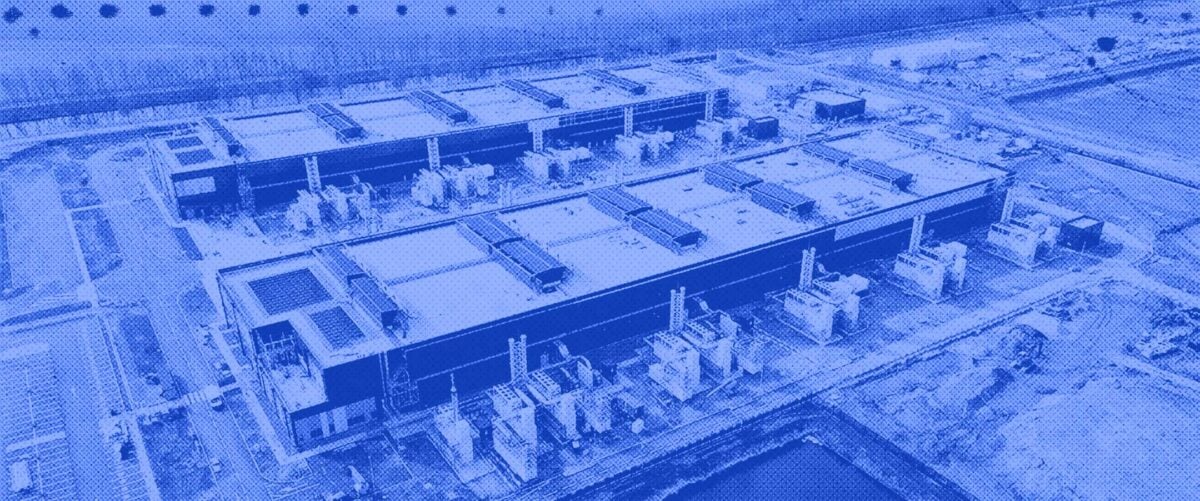
Carbon capture and storage is an expensive failure. So why is Big Tech teaming up with Big Oil to add it to data center projects?
Communities across the country are fighting against the pollution, water demands, climate emissions, and higher energy bills driven by data centers. Many are successfully grinding data center projects to a halt. In response, Big Tech is teaming up with the fossil fuel industry to promote carbon capture and storage (CCS) as a way to paint themselves as “clean.”
This self-serving corporate greenwash opens additional lines of profit and harms at the expense of frontline communities, giving anyone fighting one of these industries a reason to fight both.
It’s a match made in hell. Combining data centers and CCS won’t save the climate or make projects less harmful. It’ll only mean less water, dirtier air, higher electricity bills, and more money for Big Oil.
Both the carbon capture industry and Big Tech have expanded rapidly in recent years by threatening local democracy and forcing projects on communities. Both industries have claimed they’re helping us fight climate change, while in reality propelling us further into climate chaos.
Two Industries, Two Problems, One Big Carbon Capture Scam
AI data centers are incredibly energy-hungry; by 2028, they may command as much electricity as 55 million households. Already, 40% of data center energy comes from dirty gas.
The AI boom is already driving the construction of new gas-fired power plants and keeping old power plants on life support. This is creating a real credibility issue for the tech industry’s unenforceable climate and environmental pledges.
The fossil fuel industry has a different problem. They need new customers to justify massive new pipelines, new power plants, and fracking. CCS is the bridge between these two destructive industries. It’s providing Big Tech a new fig leaf and the fossil fuel industry a massive new customer base.
Given this, it’s no surprise that Google will join the oil and gas industry at a major CCS conference in Houston. Last year, the tech giant announced that it’s helping move forward a first-of-its-kind project combining CCS and data centers.
What is surprising is that Google chose a CCS project by agribusiness giant Archer-Daniels-Midland that leaked and threatened nearby drinking water, prompting a notice of violation from the Environmental Protection Agency. Following this disaster, members of Congress and over 150 groups from around the country called for a halt to all carbon dioxide injection wells.
Exxon is not shy about this partnership with Big Tech, either. It claims AI data centers could account for 20% of the CCS market by 2050. Exxon is also touting its partnership with NextEra Energy on a massive 1.2GW plant in the Gulf — where Exxon is working to aggressively build out CCS infrastructure — to serve data centers.
In New Mexico, regulators are working to fast-track carbon capture injection well approvals at the same time the tech industry is planning a 500-mile data center pipeline to transport gas to power Oracle’s Project Jupiter and other data centers stretching from Arizona to Texas.
All while Oracle is touting a million-dollar investment into carbon capture research, no doubt to provide some cover for Jupiter’s projected 10 million tons of annual climate pollution.
Tacking on Data Centers to CCS’s Long History of Failure
While these promises are big on hype, CCS projects routinely fail to deliver on climate promises. They’re also facing significant financial headwinds, despite massive public subsidies.
For years, the fossil fuel industry has falsely presented CCS as a “climate solution.” It purports to pull carbon dioxide from smokestacks or the air and inject it deep underground to lower carbon emissions. At first blush, the idea may sound plausible.
What the fossil fuel industry doesn’t mention is that adding carbon capture to gas and coal plants increases emissions and costs. And it conveniently fails to mention that over 90% of all carbon dioxide captured in the U.S. is used to pump more oil.
Now, data centers are starting to be built in oil fields, which will help the CCS and tech industries get around one of their major roadblocks: local opposition. Moreover, this arrangement will allow data centers to share in the profits from federal CCS subsidies, which could cost taxpayers hundreds of billions of dollars.
Ultimately, carbon capture has done nothing for the climate. It’s only given license to Big Oil to continue burning fossil fuels. And that’s exactly what carbon capture will do for data centers.
Tell Congress: End carbon capture subsidies!
Data Centers + Carbon Capture Worsen Our Water Crisis
Even without a massive data center and CCS expansion, communities across the country are struggling to protect existing water supplies. Forty-four states faced at least a moderate drought as of June 30 of this year. In the West, Lake Mead and Lake Powell, which collectively supply 40 million people with water, are facing unprecedented droughts.
Now, enter data centers, which need massive amounts of water. By 2028, data centers may require as much water as 18.5 million households just for cooling the super-hot computers inside. But that’s just the tip of the iceberg.
Because the vast majority of data centers run on fossil fuels, the water needed for energy generation makes up 71% of data centers’ water footprint. CCS projects increase the water usage at power plants by as much as 55%, which would compound the excessive water demands for data centers.
CCS is also threatening the quality of our precious water supplies. Right now, the industry is pushing Congress to weaken protections for underground drinking water. If a carbon dioxide injection well leaks into an aquifer, it can acidify the water, leaching heavy metals and potentially other toxic materials. This could render the water unusable for agriculture, livestock, or drinking now — or in the future.
Weakening these protections would shift more risks from injection wells onto communities, farmers, ranchers, and future generations. To protect our drinking water and underground aquifers, Congress needs to halt carbon dioxide injection wells until we close regulatory gaps and increase oversight.
Protect Local Communities. Stop Data Centers and Carbon Capture!
Both the carbon capture and data center industries are attempting to ram projects through by bypassing local democracy. Increasingly, they’re unsuccessful.
In the first three months of 2026 alone, local opposition has canceled or delayed $130 billion-worth of AI data centers across the U.S. Local bans against data centers have surged past 500.
Meanwhile, pushback from groups including Food & Water Watch has halted major CCS projects, such as Navigator’s carbon pipeline through the Midwest. In June, the Department of the Interior put off plans to inject carbon dioxide in offshore wells.
However, these roadblocks aren’t stopping either industry — not when so much money is on the line. Federal subsidies for CCS — boosted by Trump — have dangled billions of dollars in easy taxpayer money in front of Big Oil companies.
Many states and local leaders have rolled out the red carpet for data centers, pledging lucrative tax breaks. Both industries have allies in Congress currently pushing to deregulate the industries and allow corporations to speed past local pushback.
Food & Water Watch refuses to stand by while Big Tech and Big Oil work to plow through our communities. We’re working at the local, state, and federal levels to stop these projects and protect local control. The people living closest to a proposed polluting project should have a say in whether it gets built.
Ultimately, we need to put a halt to new data center construction, phase out fossil fuels, and reject climate scams like CCS that worsen the climate crisis and threaten our limited water supplies.
Enjoyed this article?
Sign up for updates.
TO TOP