


One Family’s Fight Against Big Oil’s Biggest Boondoggle: CCS

Published Nov 12, 2026
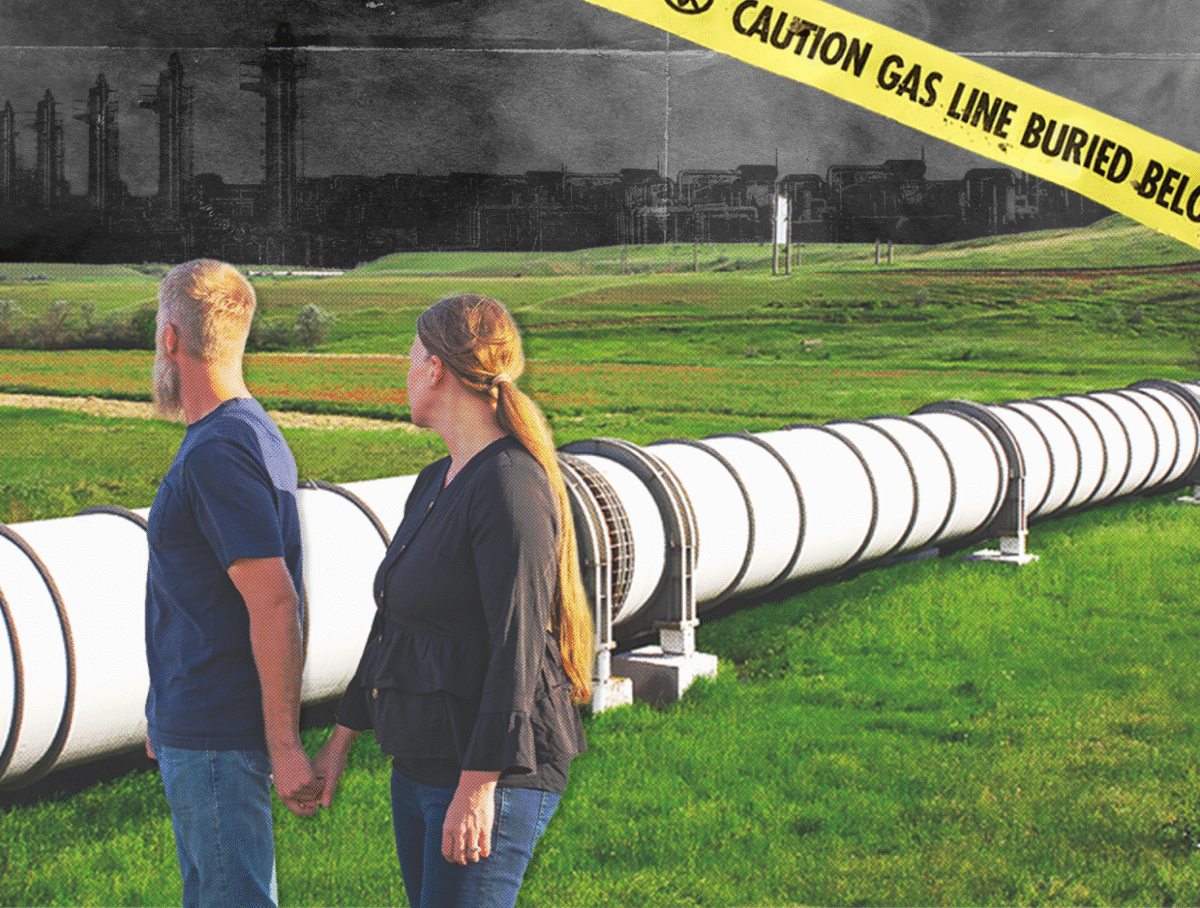
In Colorado, the Hume family has fought hazardous gas and CCS infrastructure near their home and farm for years. This is what they want other landowners to know.
The story of the Hume family in Peetz, Colorado, is being repeated all over the country. Amidst the daily labors and joys of making a living, raising a family, and steadily pursuing their dreams, an energy corporation came in and turned their lives upside down.
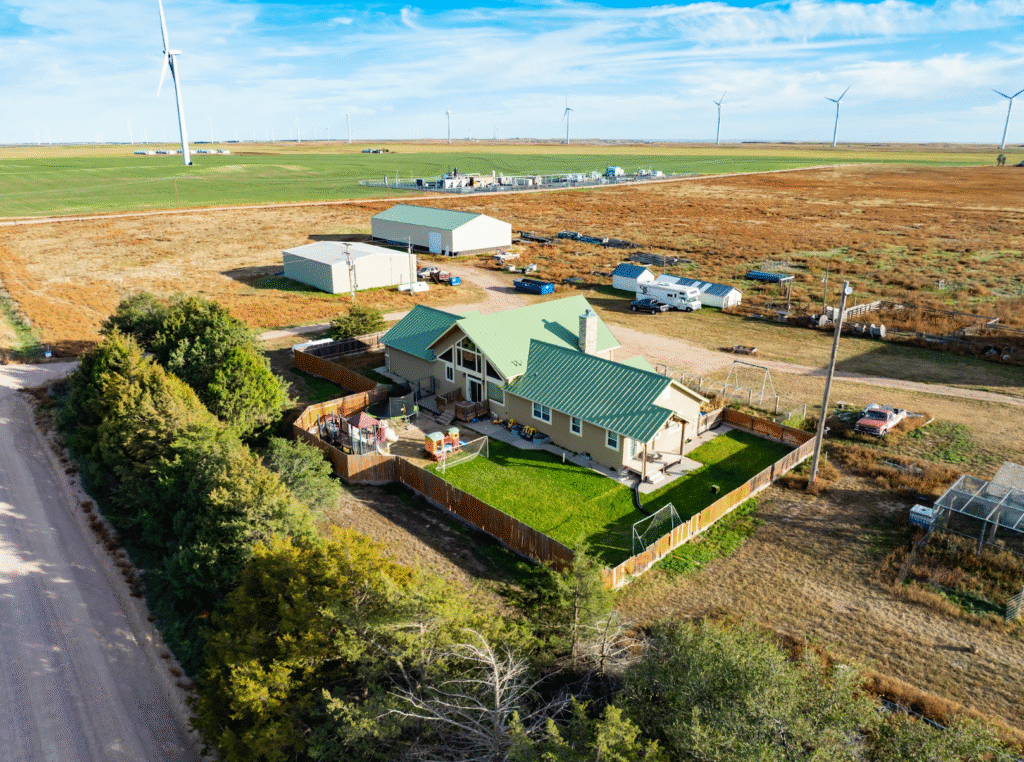
Tallgrass Energy converted the former gas pipeline Trailblazer to carry carbon dioxide (CO2) — without securing the rights to transport this new substance through the Humes’ property. To make up for the gas once transported by Trailblazer, Tallgrass has also built new gas infrastructure, including a compressor station right across the road from the Humes’ property.
“We received a letter in 2023 about the project,” said Kari Hume, plaintiff in Hume v. Tallgrass Energy and mother of seven. “But it didn’t explain that a new compressor station would be built right next door, nor did it inform us of the hazards.”
The 40-year-old Trailblazer pipeline, which runs a mere 800 feet from their home, now transports hazardous compressed CO2. Meanwhile, Oil & Gas Watch reports that the compressor station will release up to 12,600 pounds of hazardous air pollutants each year.
The Hume family now finds themselves on the front lines of Big Oil’s biggest boondoggle: carbon capture and storage (CCS). CCS purports to help the climate by capturing CO2 at polluting facilities and burying it deep underground. In this case, Trailblazer carries captured CO2 from ethanol plants in Nebraska to underground wells in Wyoming. But the truth is, CCS is a failed technology that greenwashes polluting companies.
The Humes have made the difficult decision to leave their land and the life they’ve built on it. But first, they’re pursuing justice and recompense through legal action. And they’re sharing their story and advocating for policy change so that others can avoid facing the same decision.
In this interview, we sat down with Kari to talk about her family’s experience, the dangers of this infrastructure, and how people facing polluting projects anywhere can fight back. This interview has been edited for clarity and length.
Can you tell me more about your family’s farmstead? What do you love about the area?
Kari Hume: I came out here to northeast Colorado to start a life with my husband Brady with the intention of dragging him back home to Missouri, and never did. I fell in love with the culture and the landscape here pretty quickly.
From our place, you can see over 40 miles into the distance. Out here, before we had as much industry, a pitch-black night with stars was literally like sitting in an omnimax theater. You can’t even imagine it being that big.
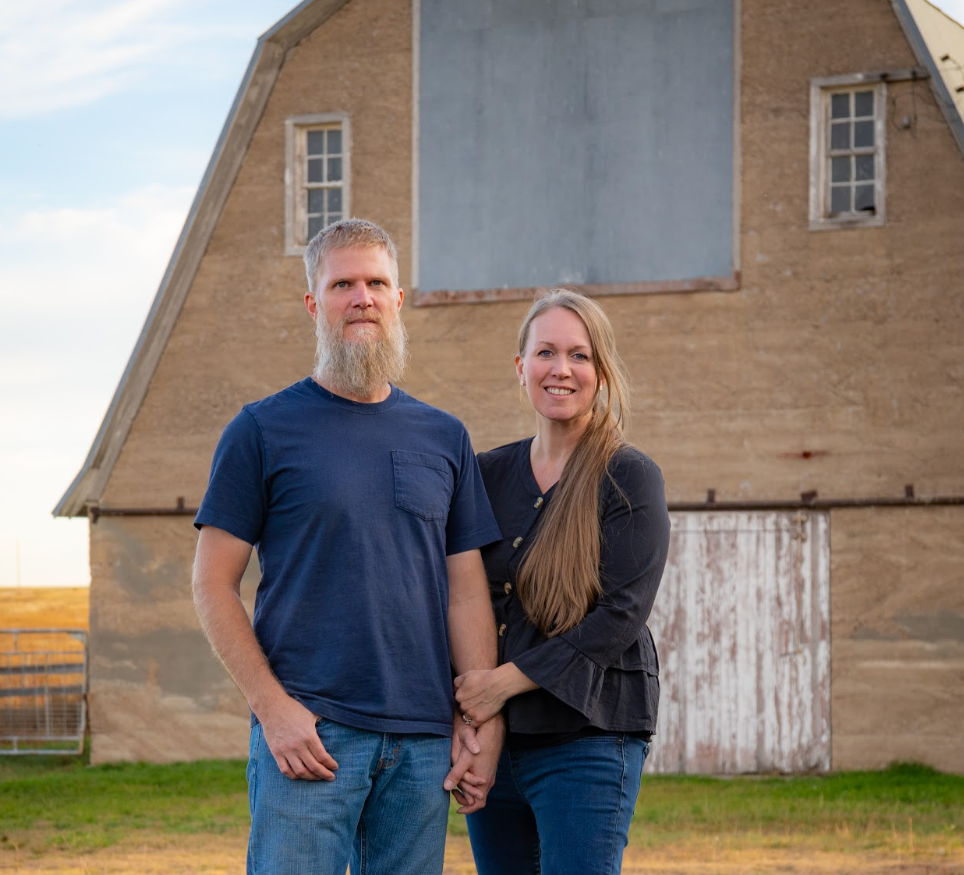
Brady was born and raised in Peetz, Colorado, and in 2005 he bought this land and this farm. It had a little farmhouse and a completely cement barn and cement blacksmith shop; gorgeous and really unique. Brady’s family farmed wheat and raised cattle, and this had the ground to do that.
We truly struggle to trust our food system, as Food & Water Watch can understand. It’s become really important to us to have truly clean food.
We brought in Palisade peaches from western Colorado, and we learned how to properly seed and sprout them to grow them here. We have natural wild plum trees, organic apples, blackberries and raspberries and asparagus. These are the kind of things that take years, that you do with the intention of someday reaping the benefits. But at this point, we’re not going to see the majority of that.
As we were having children, we really wanted to give them the opportunity to build out their own homestead and for us to live collectively. The idea of them having their own space, but us still being together, was kind of our dream.
How did this infrastructure start encroaching on your land?
KH: In 2022, we were blissfully unaware of anything else happening. But Tallgrass was going to our neighbors. Without any project, they updated their easement with the neighbors to include the transportation of CO2. Later that year, Tallgrass applied to FERC [the Federal Energy Regulatory Commission] for the Trailblazer pipeline conversion, to abandon natural gas for CO2.
Then Tallgrass requested a subdivision exemption from the County to expand its existing compressor station. This was an old small metal building that sat for years on a property adjacent to us. It’s never made noise, and until then it had one blowdown that we can recall.
There was a 9 a.m. Tuesday meeting in the dead of winter, 40 minutes away in my county seat, for the subdivision exemption. I was heavily pregnant with our sixth child, and we didn’t think much about it — the notice didn’t say anything about new construction or what would happen next — so we didn’t go.
In April of 2024, we started seeing semis pouring in, and by September, they had a whole facility constructed. Around here, you can’t get a house built in two years!
We’re getting concerned, calling the County, asking, “Where are the building permits? Where were the notices for construction?” After digging, we found that there was no building permit. They rezoned the land, and that was it.
How has all this infrastructure impacted your lives?
KH: By the end of 2024, Tallgrass had completely leached the Trailblazer pipeline of natural gas, and we started smelling things. As we’re researching, we’re getting sick from some of the strongest odor releases. And we realize that if there’s any kind of leak or rupture, we’re very close. About half of the year, the wind comes up from that direction.
That time researching uncovered that we were looking at very serious long-term implications, never mind the short-term risk of the natural gas pipeline in our pasture, less than 750 feet from our home. We’re in the impact zone for explosion from the gas pipeline and gas compressor station, as well as in the impact zone for asphyxiation from the CO2 pipeline.
So we were notifying the company, “You are not to run CO2 through our land.” Unbeknownst to us, they started running it in September 2025.
In October 2025, the employees came out to the compressor station, and after they left, this thick, sulfuric odor wafted over. We’re getting everyone inside, we’re shutting windows, we’re making sure there are no sparks. Within less than an hour, my septum was swelling, and I got lots of respiratory symptoms. That went on for 10 days while I was pregnant with my seventh child.
It’s one thing for someone to tell you something’s hazardous. It’s another for your body to revolt.
We eventually found out that these reactions match those that you can have in reaction to dangerous impurities in both natural gas and CO2 pipelines, and oddly enough, there had been five days straight of an alarm at the facility that we caught on video and sent to the company. Obviously something was wrong.
In June 2026, Tallgrass had a loud natural gas release that smelled, and they never notified us. My husband was working. He welds and uses a plasma cutter; he works with open flames. To have an explosive gas in concentrated form so close is obviously very dangerous.
Brady went over and asked the employee what had been released, who confirmed it was natural gas. That’s when we told Tallgrass, “We will move.”
Along with natural gas, you’re facing carbon capture and storage (CCS), which is a newer boondoggle from the oil and gas industry. While you were researching, what did you learn about CCS that was particularly shocking?
KH: At first, we didn’t understand the difference between compressed CO2 and, for example, exhalation. We thought of it as harmless. But we learned that once you get to just 5% concentration of CO2, you’re talking about quick death by asphyxiation of animals. These pipelines are looking at 90% or higher.
When we found out about Satartia and what happened there — that town was a mile away from that pipeline. My house is 0.15 miles away from this pipeline. [In 2020, a cloud of CO2 released from a pipeline rupture hospitalized 49 people in the town of Satartia, MS].
Some people tell us, “Well, no one died in Satartia.” They should hear these testimonies, what people in Satartia went through and what they’re still going through. And I promise you do not want that for you, your parents, your children, your friends, your enemies.
While I was reading and learning about all the health and safety issues, I was wondering, “Why are we even doing this?” It’s actually increasing emissions, not reducing them, and it’s putting everyone in harm’s way along the path.
You keep digging, and you find the tax subsidies, and it starts to make sense. [A federal tax credit program for CCS called 45Q provides unlimited funds for every ton of CO2 captured and stored. Under current rules, 45Q could funnel more than 800 billion taxpayer dollars to the CCS industry.]
It’s a maddening, perfect storm. As we’re living through the highest inflation of our lives, you find out that your taxpayer dollars are going to something that isn’t helpful for the Earth; it’s actually harmful.
Once people learn about it, no one would find this to be acceptable, unless you’re the one getting your pockets padded.
How are you seeing the CCS industry connect with data centers, another contentious type of infrastructure?
KH: From a political perspective, people can feel differently about a variety of topics, but they feel the same about a data center. When they learn about carbon capture, they’re going to feel the same way about it, too.
The two are not just similar in the fact that they’re destructive, they’re expensive, and hazardous, but they’re literally interconnected.
I’m less than two hours from Cheyenne in Laramie County, Wyoming. South of Cheyenne, there’s Google’s Project Tembo data center. Tallgrass Energy is going to provide the natural gas powering this facility, which will be a 1.8GW data center — five times more than all the homes in Wyoming currently use — set to scale up to potentially 10GW.
At the same time, Tallgrass claims that it’s going to sequester the CO2 from these natural gas emissions from Tembo. It recently got rights to more than 400 acres of federal land in Laramie County, Wyoming, to dump CO2 underneath.
These data centers are using natural gas and create an immense amount of emissions. So why wouldn’t companies claim to save the day and get the tax benefits from “sequestering” the emissions at the same time?
What has this fight against Tallgrass cost your family, and why have you stayed committed to it?
KH: At first, I didn’t want to go through the publicity, the court, the money. We sold our lake home in Missouri, and we offloaded our children’s college accounts, with the hope that we’d be able to replenish them after all this.
Our kids do unpaid chores that we keep track of, so we can pay them allowance after everything’s done. We had a dream of being 100% debt-free, and we had just paid off this farm before all this started.
I understand why people don’t fight. It truly is one family versus a Blackstone-backed corporation. But then you see how these companies behave. And if we don’t fight back, they’re going to keep doing this.
Summit Carbon Solutions was looking to build its own pipeline, and they wanted it to travel through our pasture, just 339 feet from our door. They’re rerouting it to Cheyenne County, Nebraska, just north of me, which could be just 1,500 feet away from our land.
Tallgrass and Summit, just north of us, started approaching people to inject CO2 into wells under their land. And unfortunately, in 2024, several landowners outside of our town already signed pore space agreements that were just filed in October 2026 with Tallgrass. But now, we’re working in our county and Cheyenne County to pass a moratorium on future CO2 pipelines and on sequestration wells.
I would prefer to live very quietly, but now I feel that wherever we move to, I’m still going to have to get involved and learn what infrastructure might be trying to come in.
Drone footage starts above the underground Trailblazer Pipeline carrying compressed CO2 through the Humes’ pasture moving to the compressor station over the compressor station for Rockies’ Express carrying gas. Video courtesy of the Humes.
What are other ways people can fight dangerous infrastructure in their communities?
KH: We’re working on a moratorium on CCS to give our county time to get up to speed and get educated before they accept new projects. [In October 2026, Logan County Commissioners passed a six-month moratorium on permits for CCS facilities, including well fields, pipelines, and other infrastructure.] It’ll also relieve some pressure from the landowners, who are making these decisions for things like easements by themselves, sometimes without knowing all the facts.
We’ve also been going to meetings with landowners to share information and having one-on-one conversations with people to help them understand what they’d be living next to.
And on the state level, we’re calling for a ban on eminent domain for CO2 pipelines. I drafted a bill for Colorado modeled after a South Dakota bill that does just that, and we’re working to find a sponsor in the Colorado legislature.
What would you say to people who are just learning about this issue, or about a polluting project near them?
KH: The first thing is, these companies are going to want us to feel that it’s of no use. And that’s absolutely not true. We’ve seen in Iowa, South Dakota, Nebraska, Illinois, Louisiana, Indiana — people are rising up, they’re fighting. They’re finding new friends and new commonalities with people, but they’re also learning quickly and preventing these projects.
I think we have to fight, especially for the next generations and for our land to be functional, clean, and safe. And it is worth it.
As stressful and exhausting as it can be at times, it’s also invigorating to meet other people who have fire in them. If I have a rough day where I’m just feeling exhausted and overwhelmed, I then hear from people I’ve never met who are encouraging me and giving advice.
We’re sharing data and verbiage and County information, and we’re learning from each other. These fights don’t have to look the same, either. We all have our different skills, and those are meant to work together.
All this takes a level of courage that I think we don’t really have as a nation. Many of us are comfortable; we have convenience. But courage is contagious. Just one person taking a stand or stepping up invites that boldness in someone else.
Food & Water Watch stands up to corporate polluters to defend our food, water, and climate. Sign up to get our latest updates!
Enjoyed this article?
Sign up for updates.
TO TOP