



Fighting CAFO Creep: FWW Sues to Stop Mega-Dairy Expansion

Published Feb 25, 2026
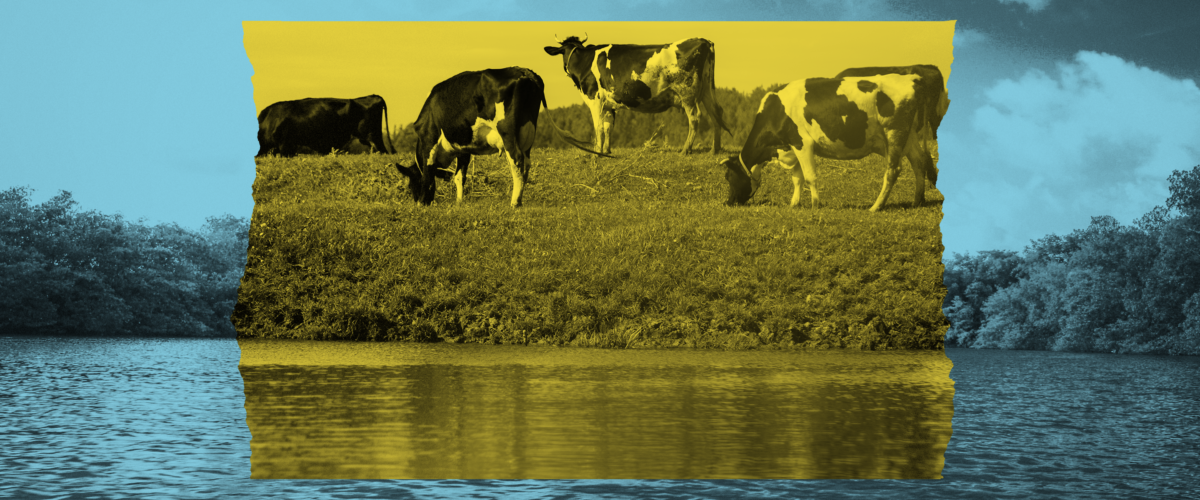
Food & Water Watch is filing suit to make sure that corporate CAFOs are held to account for their pollution.
Concentrated animal feeding operations, or CAFOs, are a destructive force in rural communities across the country. Last year, Minnesota’s largest dairy producer, Riverview, announced plans for several massive mega-dairy CAFOs in North Dakota and South Dakota, threatening neighboring communities and the nearby Red River with significant pollution.
Now, Food & Water Watch, along with the Wild & Scenic Law Center, has filed a lawsuit on behalf of Dakota Resource Council challenging approval of one of Riverview’s newest mega-dairy operations.
Corporate consolidation and plummeting farmer income have decimated Minnesota’s dairy industry, once made up of many small family farms. The state has lost more than two-thirds of its small-scale dairy farms over the past 25 years. Yet the number of dairy cows has remained relatively stable, as these animals are increasingly concentrated on large CAFOs, many of which are owned by a handful of corporations, their subsidiaries, or affiliates.
In the void left behind, one producer is profiting from the chaos. Riverview is doing so well, in fact, that the company is expanding into surrounding states.
In 2025 alone, Riverview submitted applications to construct and operate three massive new dairy facilities in the Dakotas. Two of these operations — the 12,500-head Abercrombie Dairy and the 25,000-head Herberg Dairy — would quadruple the number of dairy cows in North Dakota. They would also quadruple North Dakota’s production of pollutant-laden CAFO waste. The North Dakota Department of Environmental Quality issued a permit to each of the facilities in 2025.
South Dakota’s Department of Agriculture and Natural Resources announced it would take public comment on a second 25,000-head Riverview operation two days before Christmas.
Mega-dairy operations pose a grave threat to the water supplies of surrounding communities.
Riverview’s operations are responsible for approximately a quarter of all dairy CAFO water use in Minnesota — approximately 570 million gallons annually.
Meanwhile, the North Dakota Department of Water Resources recently approved the sale of more than 500,000 gallons of water per day (183 million gallons per year) to be drawn from the already-depleted Wahpeton Buried Valley Aquifer for Riverview to use at its Abercrombie facility.
According to Riverview’s estimates, much of the water used by the Abercrombie mega-dairy will be converted to waste in the form of approximately 42.7 million cubic feet of manure and contaminated wastewater every year. Residents near the Abercrombie Dairy site who rely on the vulnerable Wahpeton Buried Valley Aquifer for drinking water are unsurprisingly concerned about groundwater contamination stemming from Riverview’s operation.
Both the Abercrombie Dairy and Herberg Dairy will apply their waste to fields that drain into the Red River. This threatens not only the Red River but also Lake Winnipeg in Canada, which is already considered one of the most threatened lakes in the world. The International Red River Watershed Board will review Riverview’s plans for its North Dakota dairies to assess foreseeable water quality impacts.
Riverview’s expansion into the Dakotas is not random. The proposed mega-dairies come on the heels of setbacks for Riverview’s plans in Minnesota, including staunch opposition from the White Earth Band of Minnesota Chippewa Tribe that forced the company to abandon plans for a 21,000-head dairy near the White Earth Reservation in 2023.
Then, in 2025, the Minnesota Pollution Control Agency tightened pollution controls on CAFOs. Now, rather than complying with pollution control measures that would help Riverview live up to its professed desire to be “good neighbors,” the dairy magnate appears to have its sights set on neighboring states with comparatively lax regulatory landscapes.
At the same time, Riverview plans to transport waste over the Red River and apply it to Minnesota cropland according to nutrient management plans that have neither been reviewed nor approved by Minnesota regulators. By building its Herberg and Abercrombie facilities in North Dakota but spreading waste in Minnesota, Riverview is exploiting a legal loophole that allows it to evade Minnesota regulations while conducting activities known to endanger waterways.
Food & Water Watch, along with Dakota Resource Council and the Wild & Scenic Law Center, is fighting back. On October 22, 2025, we filed a lawsuit in North Dakota state court challenging the Department of Environmental Quality’s decision to issue Riverview a permit to construct and operate the Herberg Dairy. Our appeal alleges the Department erred by issuing Riverview an inadequate state permit, and that the Herberg Dairy should instead be required to obtain a stronger discharge permit under the Clean Water Act. Such a permit would ensure the Dairy is subject to monitoring requirements that would help keep the public and regulators informed about pollution entering the Red River and its tributaries.
Briefing on our lawsuit will continue throughout the spring. Check back for more updates on our fight against Riverview’s CAFO creep!
Enjoyed this article?
Sign up for updates.
TO TOP