



How We Fight Factory Farms Through the Courts — and Win!

Published Jan 13, 2026
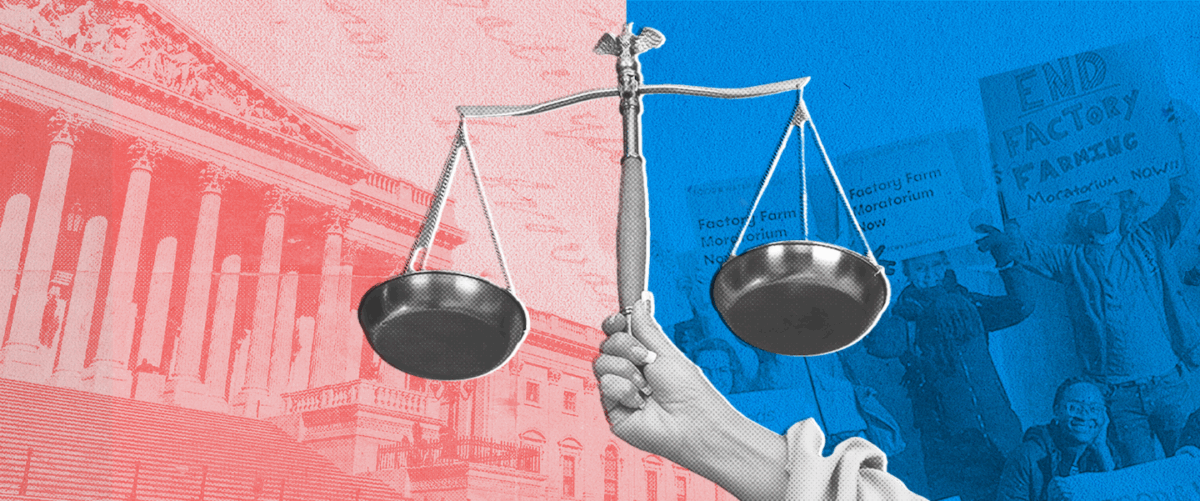
Factory farms devastate our health, environment, and economy. Our legal team is winning progress and protections against these industrial facilities — here’s how.
Concentrated animal feeding operations (CAFOs), also known as factory farms, raise hundreds, thousands, or even millions of animals in inhumane confinement. They prioritize volume to maximize output and profit, at the expense of rural communities, public health, and our water, air, and climate. And though we have laws on the books that should protect us from these harms, government agencies have given the factory farm industry special treatment and allowed it to explode with impunity.
While Big Ag profits from these polluting facilities, communities nationwide have gone unprotected. But we have an important tool to change that — the law. Food & Water Watch lawyers are pursuing innovative and effective strategies to compel government agencies to enforce the law, curb factory farm pollution, and combat the industry’s outsized influence.
Here’s how.
We’re Shining a Light on Factory Farms’ Impacts
First, we can’t fight the harms we don’t know about. Big Ag hides factory farming’s true impact, and the law has historically allowed it to do so. But we can also use the law to expose these dirty facilities, laying the groundwork for lawsuits and better regulations to force factory farms to clean up their act.
For example, we’re fighting Trump administration efforts to hide the incredible amounts of dangerous air pollution that factory farms unleash on nearby communities. The first Trump administration passed rules that exempted factory farms from reporting toxic ammonia and hydrogen sulfide pollution, keeping frontline communities in the dark about what’s in their air. Now, we’re appealing a federal Court’s approval of this unlawful rule.
We’re also working to preserve transparency around government support for factory farms. The USDA has funded many factory farms using taxpayer dollars, while also making it easier for these facilities to get this support without disclosing their environmental harms.
We’ve pushed back on this gross abuse of public funding. In 2023, we stopped a USDA Farm Service Agency rule that would have weakened the environmental review required for new factory farms before they receive government support. In many cases, the rule would have meant that impacted community members would have had no idea a factory farm was moving into the neighborhood and no opportunity to weigh in.
Finally, we’re working to mandate water pollution monitoring for factory farms across the country. These facilities create billions of pounds of dangerous waste annually, which often runs off into waterways. Agriculture is the nation’s number one source of water pollution. But too often, state and federal governments ignore this pollution to the benefit of the factory farm industry.
In 2021, we won a massive, precedent-setting victory in the 9th Circuit Court of Appeals. Our suit challenged the Environmental Protection Agency’s (EPA) unlawful practice of giving factory farms a pass on monitoring, a key requirement of the Clean Water Act. Our win led EPA to instate a new permit for factory farms in Idaho that mandates they monitor their water pollution like every other industry.
With monitoring, communities can actually force factory farms violating their permit to clean up their act. Now, we’re building on that victory to win monitoring in factory farm permits around the country, from Colorado to Montana and beyond.
We’re Pushing EPA to Properly Regulate the Livestock Industry’s Pollution
The Clean Water Act requires polluters to get permits that require them to limit their pollution. But for decades, EPA has failed to enforce it for factory farms. Now, EPA itself estimates that there are almost 10,000 large factory farms across the country discharging pollution without legally required permits.
In 2021, we sued to push the agency to update its Clean Water Act standards to develop more protective permits that cover more factory farms. In response, EPA announced in 2023 that it would undertake a nationwide study of factory farm water pollution and technologies to reduce this pollution to better understand if and how it should regulate factory farms. This “Detailed Study” should be finalized in 2026 and will set the stage for future action.
We’ve also pursued a similar case to tackle wastewater pollution from the “Meat and Poultry Products” facilities (think slaughterhouses and rendering plants) that kill and process billions of animals in the U.S. annually. These plants are a leading source of water pollution across the country.
In 2019, we challenged EPA for failing to update its standards for these facilities for decades. After that and another 2022 lawsuit, we drove the agency to commit to finalizing new regulations. The Trump administration has since walked back on that commitment, and we’re now challenging this decision in Court.
Agricultural pollution — including from factory farms — is also a major driver of the harmful algal blooms that jeopardize Lake Erie, which hundreds of thousands of Ohio residents depend on for drinking water. But the state EPA’s cleanup plan fails to address Big Ag’s contribution to the problem.
In July, a federal judge allowed us to intervene in support of a lawsuit challenging this cleanup plan, while denying Big Ag’s intervention. This is an encouraging early win in our fight to secure a cleanup plan that actually protects Lake Erie from Big Ag.
We know the law is on our side here — EPA must follow the Clean Water Act and protect our water from factory farms and meat processing facilities.
We’re Protecting Drinking Water From Big Ag
Factory farm pollution doesn’t just contaminate surface waters — it also reaches groundwater sources, which many communities depend on for drinking water. This contamination has contributed to drinking water crises across the country.
In 2020, we petitioned EPA to take emergency action in one such community in Oregon. Since then, we’ve worked with allies to replicate this strategy in four other states that need emergency action from EPA. Under the Safe Drinking Water Act, EPA can and must step in to protect access to clean water when states fail to do so, as these states have.
We’re Opposing Factory Farms’ Biogas-Fueled Expansion
Food & Water Watch has called on lawmakers to pass a national ban on new and expanding factory farms. But while we build the power needed to pass that legislation, we’re pursuing other strategies to rein in this industry.
California’s Low Carbon Fuel Standard (LCFS) program is meant to reduce the state’s climate pollution from transportation fuels. But the program lavishes lucrative rewards on factory farms for turning their waste into so-called “biogas” fuels.
This backwards policy encourages factory farms to grow larger. Moreover, the LCFS rewards factory farms nationwide, threatening more of these facilities and bigger ones — not just in California, but across the country. So in 2025, we sued to challenge the state’s LCFS scheme in Court.
We’re Evening the Playing Field for Independent Farmers
A handful of Big Ag corporations have our livestock and meat industries in a stranglehold. This has allowed them to get away with all manner of abuses, including raising prices for consumers, entrenching the factory farm model, and spewing their pollution. Their size and power over the industry have also made it harder for independent ranchers and farmers to compete. But we’re working to level the playing field.
During the Biden administration, we worked to strengthen USDA’s Packers and Stockyards Act protections for farmers and ranchers. Notably, we won a rule that prohibits meat companies from engaging in discriminatory, retaliatory, and deceptive conduct against farmers and ranchers.
Unsurprisingly, Big Ag attacked the rule in court. So we moved to intervene on behalf of a broad coalition of independent cattle producers, ranchers, and farmers to keep these new protections on the books. With stronger tools to fight agricultural monopolies and corporate abuses, we’ll protect farmers and ranchers and loosen Big Ag’s grip on our food system.
With You, We’ll Keep Fighting Factory Farms!
We have laws designed to protect us from factory farms, their abuses, and their pollution. But we need government agencies like USDA and EPA to use them. That’s where Food & Water Watch steps in to make sure those agencies are working for the public, not corporate interests. Unless held accountable, they’ll continue to let Big Ag wreak havoc on our health, the environment, the economy, and our food.
Our powerful legal strategies allow us to fight back and defend our food, water, and climate from Big Ag. As we fight for a nationwide halt to new factory farms, our legal team will continue working in the courts to win meaningful improvements and protections for communities on the frontlines of these harmful facilities.
Food & Water Watch stands up to corporate polluters and holds agencies accountable to protecting our health and environment. Get updates on our latest in your inbox!
Enjoyed this article?
Sign up for updates.
TO TOP