


4 Food Safety Laws Under Threat from the “Save Our Bacon” Act

Published Jul 17, 2026
The so-called “Save Our Bacon” Act is really about saving corporate profits by blocking state food safety regulations. Here are 4 important laws at risk.
For several years now, a few Republican lawmakers and their Big Ag allies have pushed federal legislation to effectively preempt, or block, state food safety and animal welfare laws. Opposition to these efforts feels like a no-brainer. States should have the right to pass laws for the well-being of their residents, and we all want safe, healthy food, right?
That’s why we’ve helped lead staunch opposition against this legislation. It’s failed several times — first as a standalone bill called the EATS Act, and then as language snuck into the Farm Bill, the biggest package of food and agriculture funding that Congress passes.
Now, the bill’s supporters have given EATS a rebrand as the “Save Our Bacon” Act, and they’re once again pushing to slip the language into the Farm Bill. In the coming weeks, Congress will be debating the Farm Bill, and we have a golden opportunity to ensure they don’t include these dangerous provisions in this bill package.
Why is this so important? The “Save Our Bacon” Act puts corporate greed above food safety. The bill would stop states from imposing, as a condition for sale within the state, their own stronger or different standards for imported agricultural products derived from certain livestock.
Passing this legislation through the Farm Bill would mean less healthy animals on farms and less safe food on our plates. Here are four state laws threatened by the “Save Our Bacon” Act, and the consequences for people’s health and safety.
1. “Save Our Bacon” Risks More Bird Flu In Iowa
Currently, Iowa law requires veterinarians to inspect all poultry, domestic fowl, and hatching eggs before they’re imported into the state. The inspections are even more stringent for birds from a bird-flu-infected area. The law also bans the import of birds and poultry products from an area under quarantine.
This law is especially important as we’ve seen bird flu spread rapidly across the United States. This spread not only risks the virus jumping from bird to human — it’s also been incredibly costly.
There is no treatment for bird flu, forcing farmers to kill entire flocks to prevent the spread (Food & Water Watch supports legislation that would stop federal funds from being used on the most inhumane methods for culling).
From 2022 to 2024, the average outbreak cost Iowa farmers $3.7 million. The state spent over $183 million responding to bird flu. On top of that, corporations like egg producer Cal-Maine have used bird flu as a cover to raise their prices and profits.
Including the “Save Our Bacon” Act in the Farm Bill could block Iowa laws that protect poultry flocks and farm workers from the devastation of bird flu. Twelve other Iowa laws are also under threat!
2. “Save Our Bacon” Risks More Salmonella in Minnesota
Minnesota also requires a slate of disease prevention mandates for poultry and eggs imported into the state. That includes a key provision requiring chicken eggs, chicks, and chickens to be free of Salmonella bacteria before they come into the state.
Consuming salmonella-contaminated foods can cause a foodborne illness called salmonellosis, which causes diarrhea, fever, nausea, and vomiting. In 2024, Minnesota reported its highest-ever total salmonellosis case count, resulting in the deaths of two Minnesotans.
Including the “Save Our Bacon” Act in the Farm Bill could block Minnesota state laws that protect consumers from devastating, potentially fatal foodborne illness, and eleven additional Minnesota laws are under threat.
3. “Save Our Bacon” Risks Screwworm in Georgia
You might recognize screwworm from the headlines — in June of this year, the New World Screwworm returned to the U.S. for the first time in decades, infecting livestock, goats, sheep, and dogs. This devastating pest burrows into the flesh of its hosts, which can also include cats, birds, other wildlife, and even humans.
Georgia law prohibits the import of animals from states known to have a screwworm problem. This law is crucial to preventing any screwworm outbreak from reaching Georgia.
And it isn’t just important for public health — it’s also important for the state’s economic health. In 1976, a screwworm outbreak cost the state of Texas an estimated $1 billion in economic losses. Georgia, and any state, should have the ability to stop animals with screwworm from coming into the state.
But the “Save Our Bacon” Act puts these protections in danger. Including it in the Farm Bill could block state laws that protect livestock, pets, and Georgians from the devastating, painful, and potentially fatal New World Screwworm infestation. And 23 other Georgia laws are threatened if the Farm Bill includes the “Save Our Bacon” Act.
4. “Save Our Bacon” Risks Pseudorabies in Michigan
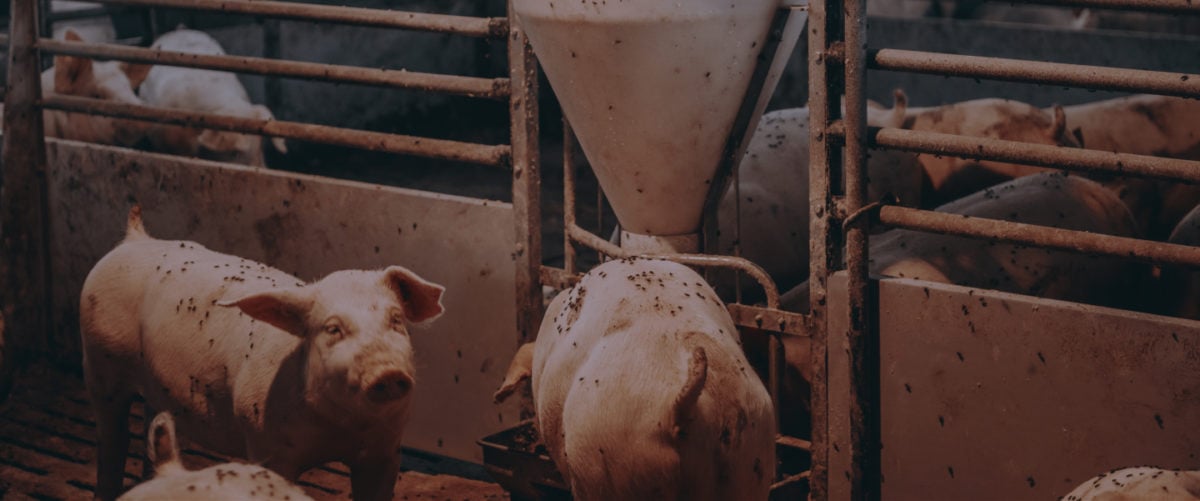
The state of Michigan requires that feeder pigs (piglets being raised and fed until they reach market weight) imported into the state come from a pseudorabies-free herd, come from a state that participates in an approved pseudorabies testing program, or originate from a pseudorabies-free state.
What is pseudorabies exactly? This virus causes breathing problems and reproductive failure in piglets, and it has a high mortality rate. While most common in pigs, it can also spread to other livestock and most other mammals. It’s almost always fatal.
This April, the U.S. saw its first official pseudorabies outbreak in a commercial swine herd in more than twenty years, with pigs testing positive in Iowa and Texas.
If the outbreak reached Michigan, the impact would be devastating for the state’s multi-million-dollar hog market. But including the “Save Our Bacon” Act in the Farm Bill could block Michigan state laws that protect the state’s swine market, hog farmers, as well as dogs, cats, and other livestock. Four other Michigan laws are threatened if the Farm Bill includes the “Save Our Bacon” Act.
Save Our Food, Say No to “Save Our Bacon”!
The “Save Our Bacon” Act would strip states of their right to protect animals, farmers, and consumers. The supporters of this bill want to take away our right to make local decisions about our food system, all in the name of cutting “red tape” and clearing the way for corporate profits.
Our leaders must stand up to Big Ag’s greed and defend our food by opposing the “Save Our Bacon” Act, or any provision that would override state-level standards that protect animals, farmers, and consumers.
Tell Congress: Stop the “Save Our Bacon” Act!
Enjoyed this article?
Sign up for updates.
TO TOP