



Meet the People Fighting for Our Food, Water, and Climate
Published Jul 7, 2026
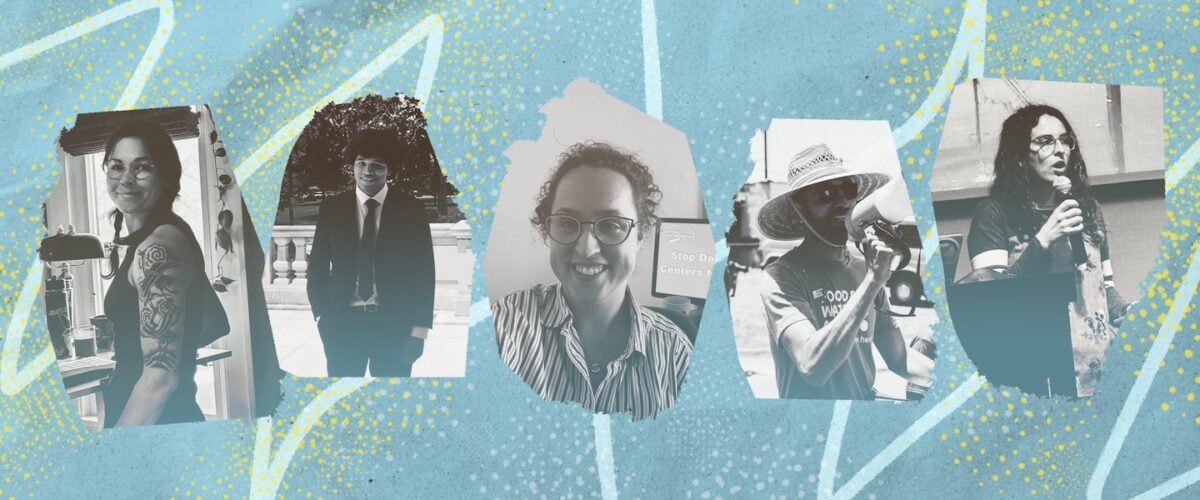
From lawyers, to organizers, to policy experts, Food & Water Watch staff are dedicated to a livable future. Learn more about their work!
Every day, Food & Water Watch staff give their all to protect our communities and the planet. They advocate for solutions in the halls of Congress and stand up for the environment in Court. They connect activists across the country and join their neighbors in taking on polluting corporations.
As a Food & Water Watch member, your generosity is essential to their work. You’ve powered victories like defending wetlands from far-right attacks, curtailing oil and gas drilling, and emboldening state governors to protect our water from microplastics. With you, we’re fighting for a nationwide pause on water-guzzling and energy-hungry data centers. We’re standing up to corporate polluters to protect our health, environment, and communities.
Learn more about the people spearheading these efforts!
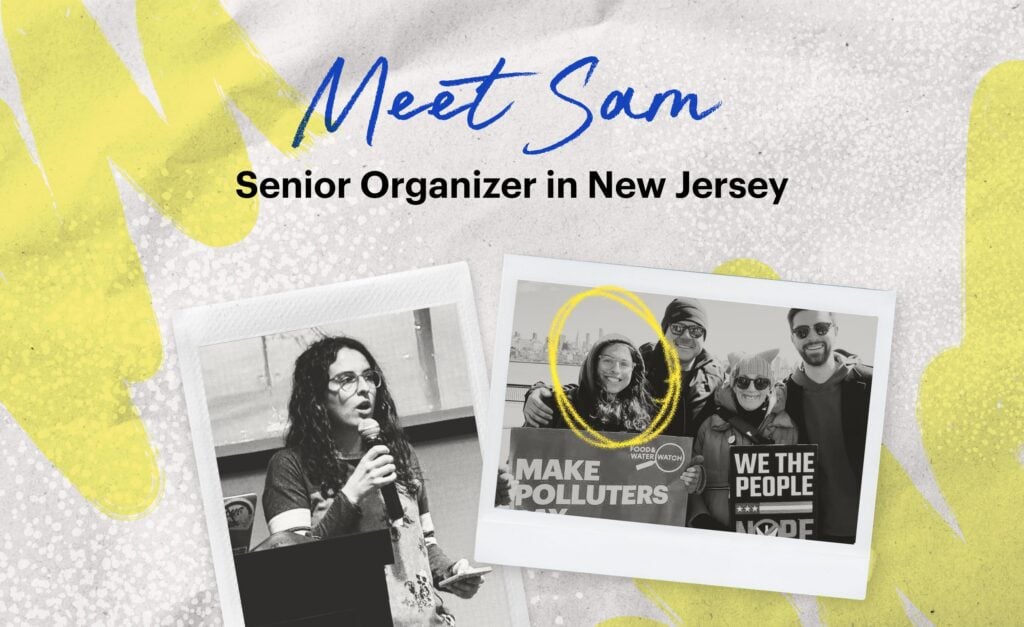
What brought you to environmental activism and Food & Water Watch?
When I was in high school, Hurricane Irene in 2011 devastated a big part of my town. Our entire downtown was underwater. The following year, Hurricane Sandy hit New Jersey, and I didn’t have school for two weeks.
After finishing school, I had a lot of anxiety about the climate; I went through a period of pretty intense despair. But I started making the connection that this was happening because of policy choices, and because of the lies and deception from the fossil fuel industry. It made me motivated to do something about it.
After Greta Thunberg’s climate strike, the movement started getting a lot of global support, and people around the world were doing actions. In 2019, I was a volunteer with Food & Water Watch, and I organized a climate strike demonstration in northern New Jersey with organizers on the Jersey team.
What are you currently working on?
Our main campaign right now is to pass a bill to Make Polluters Pay, which is New Jersey’s Climate Superfund law. This bill would essentially shift some of the enormous costs of the climate crisis that New Jersey residents face onto the fossil fuel industry. It would make the industry pay its fair share for the damage it’s causing.
We’ve been working to pass this bill for close to two years. Unfortunately, it didn’t pass last legislative session, but a new session began last January, and we’ve already made great progress.
We’ve organized a bunch of public demonstrations to raise support for the bill around the state, brought many supporters down to the state capitol to talk to legislators, and have seen the bill pass through every committee. What’s left is to get it to the floor for a full vote by the legislature. I’m confident that it’ll pass this time around!
What’s your favorite part about working at Food & Water Watch?
My favorite thing is connecting with our volunteers. We have an amazing, dedicated team of volunteers in New Jersey. It’s been really great to get to meet so many new people and help them take ownership over a piece of the campaign; to help them find the ways that work best for them to plug into our work and develop new skills.
What have you learned during your time at Food & Water Watch so far?
It’s really important to build a campaign that you know you can win. And by that, I mean being able to identify who the person is who can give us what we want, which we call the target.
In our organizing model, the target is usually an elected official; someone who’s accountable to us and has the authority to make the decision we want them to make, whether that’s to pass a piece of legislation or stop fossil fuel infrastructure or a data center. There’s a clear mechanism and target for us to reach our goal.
And then, it’s important to make sure we’re building a campaign that moves the target toward making the decision we want them to make. At the same time, we make sure that we’re being transparent about that with volunteers and allies, so everyone understands why we do the things we do, why we use the tactics we do, and why we make the decisions we do.
What has given you hope about the future?
I’ve been so inspired by the ways in which the people that we work with, both other staff and our volunteers, have been showing up at this moment when things feel really hard and dark, and we’re facing pretty brutal attacks on our climate and environment from the Trump administration. Our volunteers keep showing up with creativity, dedication, resolve, and a firm belief that we can change this and turn things around.
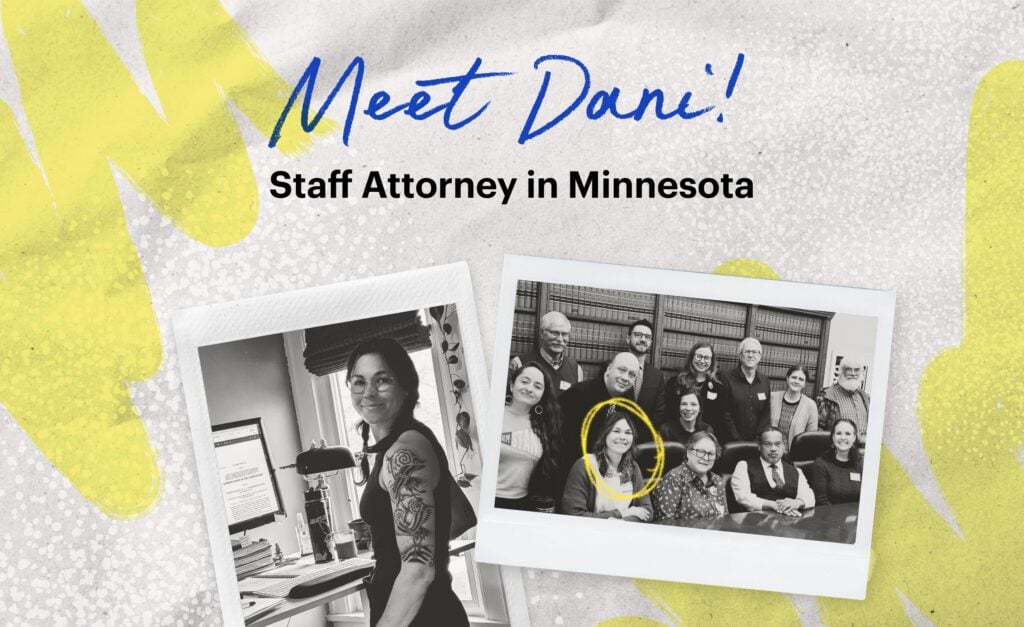
What brought you to environmental activism?
In college, I took a lot of classes on climate change, environmental ethics, and agriculture, and I got involved at a community farm. Then, I took a job as a science teacher in Colorado and fell in love with being outside, so I brought that into my teaching strategy.
We started a school community garden and took our kids to the YMCA of the Rockies. That felt like true teaching, to instill that love of nature and an environmental ethic into kids.
But at the same time, it was so frustrating to tell these 8th graders about everything going on in the news, while feeling like I didn’t have any agency over it. I wanted to do something more direct on environmental issues, so I went to law school to do agricultural and environmental work.
Why are Food & Water Watch’s issues important to you?
Food is something that should be wholesome and community-oriented; something that celebrates culture and the land. But once you start learning about our current food system and how harmful it is to basically everyone involved in it — workers, the land, the water, the ecosystems — it feels really obviously wrong. And from my gardening and farming background, I know there are ways to do it that are so beneficial.
Can you tell us about a case you’re currently working on?
One of the things I’m most excited about right now is a campaign that we’re working on in coalition with groups from Minnesota, North Dakota, and South Dakota against Riverview Dairy. This corporation is trying to expand their factory farms across the Midwest and the South.
Riverview has this line about being “good neighbors.” But we’re watching its tactics, trying to convince people that it’ll fix local economies. We’re seeing places like Morris, MN, where Riverview has become the largest dairy producer and has driven family farmers out of the market, ruining farmers’ livelihoods.
Now, Riverview is moving into states that don’t have as stringent environmental protections. We’re representing the Dakota Resource Council to appeal a permit for a 25,000-head Riverview dairy in North Dakota, which threatens to pollute the Red River.
At the same time, we’ve got organizers talking to farmers, communications people getting the word out, and researchers digging into Riverview. All that, with the legal advocacy piece, too — it feels like a holistic campaign, and that’s been really rewarding.
What are you most proud of from your time at Food & Water Watch?
Last year, I led a working group on state permits as part of a coalition of lawyers and advocates working on transforming the animal agriculture industry. The industry is pursuing a lot of different tactics to make these permits less protective.
The working group is a space to share information across different states so we can start preparing our responses, like setting up litigation to strengthen these permits. That’s been very collaborative with lawyers, but also with community members. We’ve been sharing a lot of information about when to talk to a lawyer, and what resources they need to start litigation, and how to submit comments on these permits to courts.
The working group’s repository of past comments has helped community members to shape their comments on permits in states like Maryland, Minnesota, Nebraska, and North Dakota.
What inspires you and brings you hope?
At Food & Water Watch, I’m surrounded by people who are working really hard and are very dedicated to issues that I care about, too. And they’re doing it with a lot of integrity. Everyone on the legal team is smart and passionate. That’s very motivating, and I learn a lot from watching other lawyers.
It’s also been especially great to be part of the Iowa campaign for a sustainable food system and restoring water quality. We have a long way to go, but I’ve seen real progress there. And with our opposition against the Cancer Gag Act, we’ve helped it become a big issue nationwide and at the Supreme Court. People around Iowa are starting to understand how the ag industry is impacting their health, water, and lives, and Food & Water Watch has been a big part of that.
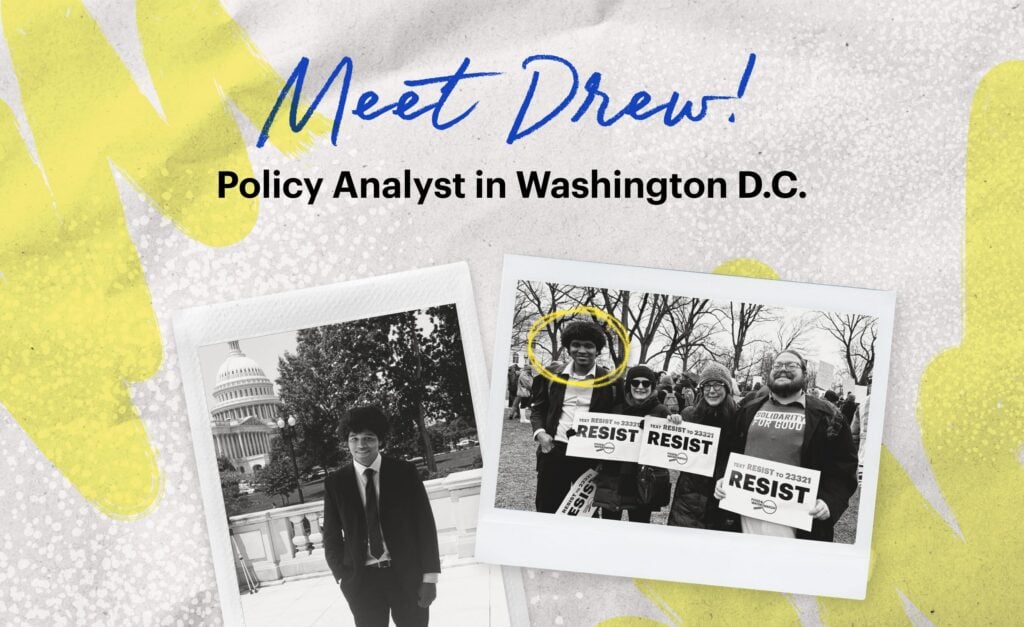
Can you tell us about what you’re currently working on?
A lot of my work is connecting with our allies in Congress and their staffers to get bills introduced on our issues and gather support from other Congress members. For example, we worked with Sen. Bernie Sanders and Rep. Alexandria Ocasio-Cortez on their recent AI data center moratorium bill.
Right now, I’m working with the People’s Environmental Justice Caucus, a new caucus in Congress, to get as much information in front of them as possible about climate scams like carbon capture, hydrogen, and nuclear energy. We know they’re going to be hearing a lot about these false solutions, so we’re working to get the facts to them about why these energy sources don’t solve the climate crisis.
I’ve also been working on our campaign to get microplastics monitored in drinking water. Late last year, we drove seven governors to submit a petition to the Environmental Protection Agency calling for monitoring microplastics. Under the Safe Drinking Water Act, this requires the EPA to start monitoring or give a reason why another contaminant is more important.
This victory was a really big team effort, but I did a lot of outreach with allies and Congressional staffers. I called my Mom when we heard the governors sent their petition — I was super proud of that win.
What brought you to environmental activism and Food & Water Watch?
After I graduated from college, I couldn’t find a job that I liked, politically. My dad is an oil lobbyist for ConocoPhillips and offered me a job, but I could not do that. Growing up in Houston, allegiance to the oil industry and the plastics industry is very normalized. It always felt wrong, but not in a way I could define.
Eventually, I became a carpenter and worked in construction for a while, and then I went back to school for a Master’s in history before I started working here.
I was drawn to Food & Water Watch’s outlook on environmentalism — the focus on eliminating corporate control in the government, which is super important. A key part of the mess we’re in is that the people polluting are paying our politicians to make laws for them so that they can continue to pollute. That’s why we’re working to ensure our government works for us and our planet, not corporations.
What have you seen at Food & Water Watch that motivates and inspires you in this work?
The first week I was on the job, we had a fly-in with kids from the Dakota Access Pipeline. That’s where we connect people in frontline communities across the country with leaders in D.C. They spoke to Congress members about the dangers of pipeline leaks. There are very few protections, and companies often don’t even have to say that it’s leaked. Then, last year, we did a fly-in for the microplastics campaign, and one community member came up with a jar of microplastics that she’d scooped up from a nearby river.
The fact that people are fighting these projects at all is incredibly inspiring to me. These people have kids, families, and jobs.
When I was in college, I’d go up to Tulane from Houston — that’s a three-hour drive through Cancer Alley. You can see all the smokestacks from the petrochemical industry; you can smell the pollution. And just imagining having to live under that, and seeing the babies cough, seeing people get asthma, people’s blood pressure going up — it’s evil. If I can do anything to fight that, that’s a good thing.
It’s encouraging that for most of the issues I work on, the vast majority of Americans agree with what we’re doing. Everyone wants clean water to drink. Pretty much everyone hates these data centers, especially near them.
Five Gyres did a poll on microplastic pollution and found that 79% of people want immediate action on microplastics. I don’t know if I can think of many issues in our politics where 79% of people agree!
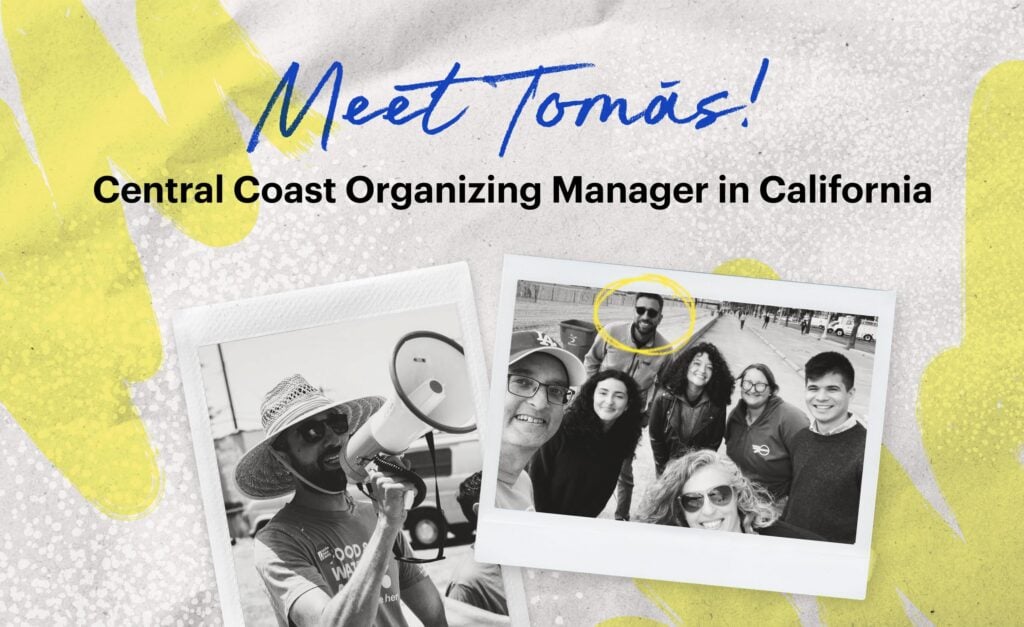
What brought you to environmental activism and Food & Water Watch?
I was raised in a political family. My mom would take us to United Farmworkers marches when we were little. She was the daughter of undocumented immigrants working in the fields, and she’s always been involved in the community. My parents got me into the fight against fracking.
Originally, I worked on voter registration and politics with the Assembly Democrats. That’s what brought me to Ventura County in 2014. At the time, my parents were working in our home county of San Benito to stop a thousand wells right near Pinnacles National Park.
So we said, “Let’s put a fracking ban on the ballot.” I wrote up a field plan, and we started reaching out to groups for support. At the time, Food & Water Watch was one of the only big environmental groups to take a position on banning fracking. People from the Oakland office came down and heard our proposal and offered to help.
We got outspent by the oil industry 15 to 1, but we knocked on every single door in the county and ended up winning the fracking ban by 60%. Soon after, I started working with Food & Water Watch as a full-time organizer.
What drew me to Food & Water Watch is that we don’t ask for half-steps. We ask for what we need, for full solutions. We don’t take corporate money, and we don’t sell out communities and people along the way.
Can you talk about a victory you’re really proud of?
Ventura is the third-highest oil-producing county in the state, after our neighbors Kern and Los Angeles County. And the majority of it is next to homes and schools. Study after study has shown health effects, such as low birth weights, for people growing up next to oil wells. We’ve seen this firsthand in communities, too.
We want to ban all drilling, but we started with buffer zones between drilling and homes and schools because of all these immediate health impacts these wells have. So we successfully pushed Ventura to pass a county-wide ordinance to ban new drilling next to homes and schools.
Once we won, we proved that other counties could do it, too. Now Kern County, which is much more affected than us, has those buffer zones. And two years after Ventura’s ordinance, our coalition finally got a law passed for buffer zones statewide.
Now, the oil industry is suing to strike down this law. Food & Water Watch has now joined a lawsuit with Earthjustice against the Trump administration to protect these buffer zones. But in the meantime, all our work has really shown the industry that it won’t have an easy time anymore; that people will fight back to protect their communities.
What are you currently working on?
At the state and local level, we’ve been working to pass a Make Polluters Pay bill that’s been passed in New York and in other states. Unfortunately, it didn’t pass this year. But ahead of the next legislative session, we’re getting cities, counties, and other elected officials to support Make Polluters Pay so that when it is reintroduced, we can hit the ground running.
I’m also working on our campaign to stop data centers. There are a lot of data centers being pushed here in California, and we expect that trend to continue. We’re also trying to get our members of Congress to sign onto the federal moratorium bill, which would pause new data centers nationwide.
What’s something you learned during your time at Food & Water Watch?
Before, I thought political change happens during elections. But being here, I realized that it’s a long game. Elections are important, but you’ve also got to win at the local supervisor meetings.
I’ve learned that you really need to invest in yourself and your community to last in the long run. With electoral campaigns, you burn yourself out, but you get to rest afterward. Our work at Food & Water Watch is like one long campaign to protect our neighborhood and our planet.
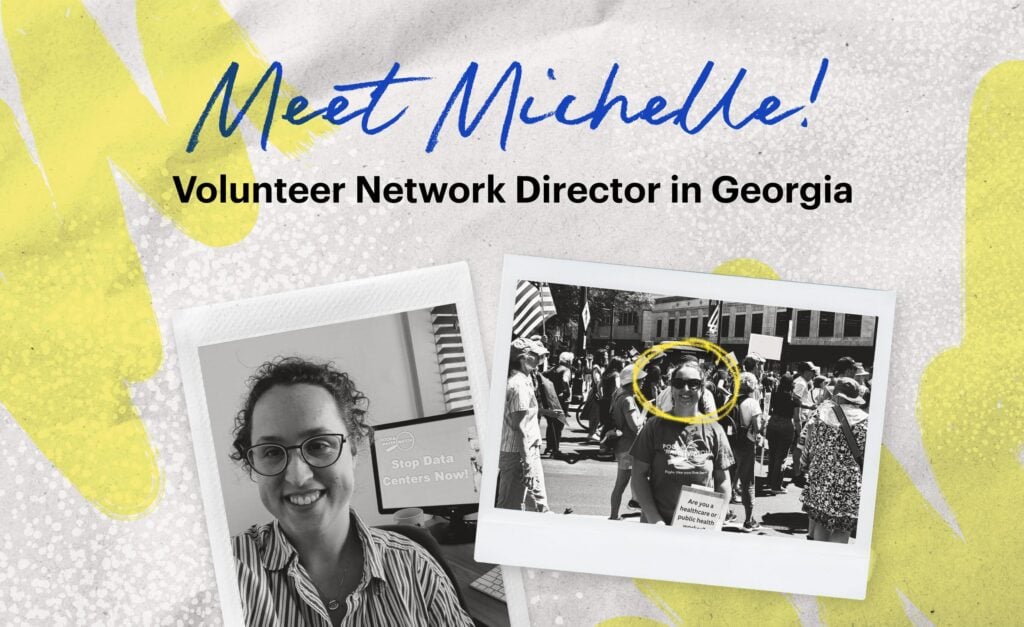
What first brought you to environmental activism?
My parents are big animal lovers, and that made me very concerned about the climate as a kid. At that time, it was about polar bears and wildlife and how they could suffer in the future.
But then, in college, I saw an abandoned mountaintop removal coal mining site in Virginia. There were homes and a tiny little church literally steps away from where this mountain had been blown up. It had just rained, and there was water running down the side of the road, and it was bright red.
It really emphasized to me how we’re all going to have to face awful impacts from climate change, but at the heart of it is the fossil fuel industry, and its impacts go far beyond the climate.
What are you currently working on?
One of the campaigns I’m working on is our Stop Data Centers Now! Campaign. In my role, that looks like creating resources like toolkits, webinars, and trainings that activists anywhere across the country can use in their own communities.
For example, I’m working on a training on how to power map local elected officials. That’s where you get to know everything you can about an elected official to find connections and levers you can pull to get them on your side. For example, what organizations in your community can you connect with that your local elected officials may care about?
If you’ve never engaged with local government before, it can be hard to start, so we create resources that point people in the right direction.
What’s something you’ve been proud of at Food & Water Watch?
In December, we hold our annual volunteer convergence. We bring everyone together over Zoom to celebrate the work that we achieved that year and ready ourselves for the work ahead.
Part of the agenda is a round-up of victories presented by volunteers who played a part in them. It’s so inspiring! I always have the biggest smile on my face, the kind where your cheeks hurt afterward. I’m proud to be one of the organizers who helped recruit, train, and support the folks who won these victories.
What have you learned from your time here so far?
In 2020, we launched the Volunteer Network just as the COVID-19 pandemic pushed everyone online. That forced me to get really good at holding interesting virtual meetings.
While in-person activities build stronger relationships, the virtual and remote activities mean that anybody can work with us. That’s very important to me.
When I first started organizing in college, there wasn’t a lot of activism on my campus. If it wasn’t for an organizer based in D.C. doing coaching calls with me, I wouldn’t be doing this now. So I’m very passionate about providing resources and support to help folks engage in these critical issues, regardless of where they live.
What brings you hope?
Over the last several years, our volunteer base has grown immensely. We’re seeing more volunteer leaders, too. They help us train and guide other volunteers on the team. For example, they’ll check in to see how they can help newer folks during an event. They hold volunteer meetings, do outreach to other organizations to support our campaigns, and build relationships with elected officials.
This year, for the first time ever, we’re going to hold two in-person volunteer retreats, one in the Northeast and one in Iowa, to train volunteers on critical power-building skills.
As an organization, we’ve grown a lot in our understanding of what it takes to support volunteers. And at the same time, more people are getting and staying involved in fighting for a better future.
Your generosity powers all of this incredible work! Make a gift today.
Enjoyed this article?
Sign up for updates.
TO TOP