



Riverview’s Mega-Dairy Pollution Must Be Stopped

Published Feb 24, 2026
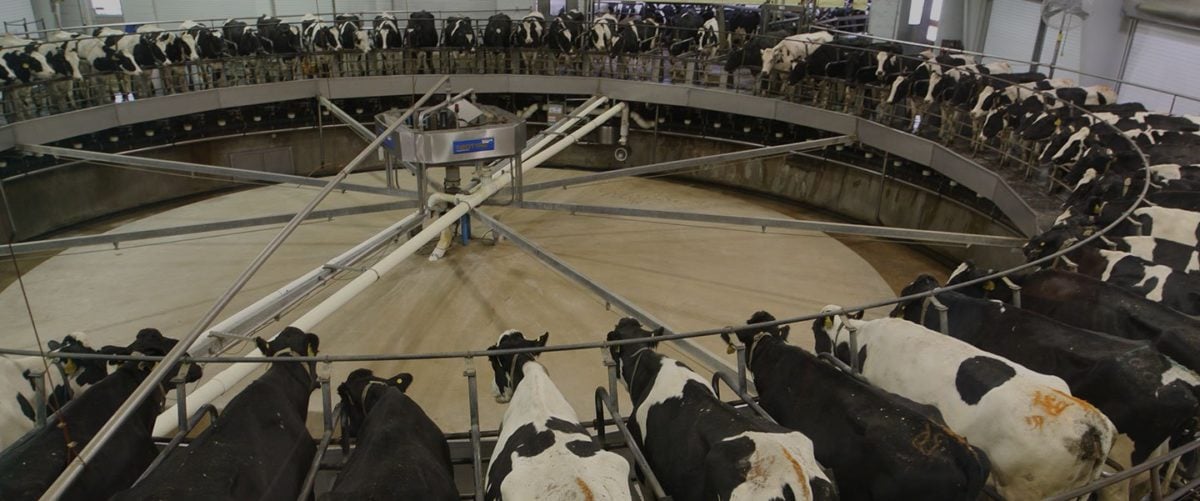
Riverview, Minnesota’s largest dairy producer, is expanding into the Dakotas. We’re suing to protect communities from its pollution.
For decades, the small independent farms that once made up Minnesota’s dairy industry have been crowded out by massive corporate mega-dairies. These facilities stuff thousands of cows in warehouses and produce unimaginable amounts of manure and dangerous pollution.
Now, the state’s largest dairy producer is proposing several new mega-dairies in the Dakotas. If Riverview builds these facilities as currently planned, they will have far-reaching consequences throughout the Midwest and beyond.
We won’t let this stand. Food & Water Watch, with the Wild & Scenic Law Center, has filed a lawsuit on behalf of Dakota Resource Council challenging the approval of one of Riverview’s new mega-dairy operations. Riverview’s harmful pollution cannot be allowed to contaminate our rivers, streams, and groundwater.
Riverview Grows Amid Minnesota’s Dying Dairy Industry
Over the past 25 years, Minnesota has lost more than two-thirds of its small-scale dairy farms. Yet, the number of dairy cows in the state has remained relatively stable because these animals are increasingly concentrated on large, corporate-run mega-dairies.
Family dairy farmers have been forced to abandon the field in droves. While the cost of milk at grocery stores has skyrocketed, prices paid to most dairy farmers are catastrophically low. Only half the retail price of milk makes its way into farmers’ pockets. Moreover, the costs of farm inputs like feed have soared. As a result, only the biggest (i.e. richest) operations are left to rule the market.
While small family farms shutter, one producer is not only surviving, but thriving. Riverview’s Minnesota dairies now produce so much milk that smaller farms simply cannot compete. Riverview is doing so well, in fact, that the company is expanding into surrounding states.
Riverview’s Mega-Dairies Will Be Major Water Hogs
In 2025 alone, Riverview submitted applications to construct and operate three massive new dairy facilities in the Dakotas. Two of these operations — the 12,500-head Abercrombie Dairy and the 25,000-head Herberg Dairy planned for the Red River Valley — have been approved by the North Dakota Department of Environmental Quality. Together, they would quadruple the number of dairy cows in North Dakota.
These facilities threaten water supplies in the region. Mega-dairies are extremely thirsty endeavors, requiring massive amounts of water to wash and water dairy cows. Riverview’s existing Minnesota operations already use approximately 570 million gallons annually, and they recently announced plans to open another three operations near Morris, MN.
The North Dakota Department of Water Resources recently approved the sale of more than 500,000 gallons of water per day to be drawn from the Wahpeton Buried Valley Aquifer for Riverview’s Abercrombie facility alone. This aquifer is the drinking water source for at least 8,000 Wahpeton residents and has experienced nearly 50 years of declining water levels.
Riverview Promises Water Pollution Across State and National Borders
Mega-dairies don’t just consume water — they pollute it, too. According to Riverview’s estimates, Abercrombie and Herberg mega-dairies will generate approximately 247.5 million cubic feet of manure and contaminated wastewater every year.
Mega-dairy waste contains a hazardous cocktail of pollutants, including nitrogen, phosphorus, pharmaceuticals, heavy metals, and pathogens like E. coli. Nitrogen pollution is particularly concerning because bacteria in the environment convert nitrogen to nitrate. Research has linked this water pollutant to cancers, thyroid disorders, birth defects, and potentially fatal blue baby syndrome.
Southern Minnesota, Iowa, and other areas of the country with high concentrations of factory farms are experiencing drinking water crises stemming from unsafe nitrate levels in their water. Unsurprisingly, residents who rely on the Wahpeton Buried Valley Aquifer for drinking water are concerned about contamination stemming from Riverview’s Abercrombie dairy.
Pollution impacts from these mega-dairies won’t be limited to nearby waters. Riverview’s proposed North Dakota dairies will dispose of their waste by applying it to fields that drain into the Red River, risking pollution into the River and ultimately, Canada’s Lake Winnipeg.
Lake Winnipeg is already considered one of the most threatened lakes in the world. Canadian groups and even international groups are raising the alarm that additional phosphorus pollution to the Red River will worsen Lake Winnipeg’s toxic hazardous algal blooms.
Riverview also plans to transport waste from its North Dakota facilities over the Red River and apply it to Minnesota cropland. But its nutrient management plans (which explain how it will handle its waste) have neither been reviewed nor approved by the Minnesota Pollution Control Agency.
Riverview is exploiting a legal loophole that allows it to evade Minnesota regulations while conducting activities known to endanger Minnesota’s water resources.
Riverview’s Dakota Expansion Isn’t Random
This is not the first time a Riverview operation has been implicated in attempts to evade public scrutiny and environmental oversight. In 2015, Minnesota’s Citizens’ Board — once part of the Minnesota Pollution Control Agency — ordered an environmental impact statement for a proposed Riverview dairy.
One member of Riverview’s founding family was reportedly so infuriated by this that he spent two weeks airing his grievances to industry groups that wield lobbying power in Minnesota’s state legislature. By the end of the session, the Citizens’ Board had been abolished.
Over the years, Riverview has been forced to contend with roadblocks in its takeover of the Minnesota dairy industry. It faced staunch opposition from the White Earth Band of the Minnesota Chippewa Tribe, which forced the company to abandon plans for a 21,000-head dairy near the White Earth Reservation.
The Minnesota Pollution Control Agency also recently tightened pollution controls on factory farms. These pollution control measures would help Riverview live up to its professed desire to be “good neighbors.” But rather than clean up its act, the dairy magnate appears to have its sights set on neighboring states with comparatively lax regulations.
Food & Water Watch Fights to Hold Riverview Accountable for Pollution
Riverview’s proposed expansion threatens to wreak havoc on water supplies in a growing number of communities. While its neighbors suffer, Riverview will grow and profit. But Food & Water Watch, along with Dakota Resource Council and the Wild & Scenic Law Center, are fighting back.
On October 22, 2025, we filed a lawsuit in North Dakota state court challenging the Department of Environmental Quality’s decision to issue Riverview a permit to construct and operate the Herberg Dairy.
To protect the Red River and Riverview’s potential neighbors, DEQ’s permit cannot stand. As we argue in our suit, Riverview’s Herberg Dairy must be required to obtain a federal discharge permit under the Clean Water Act, which would subject the dairy to pollution monitoring requirements.
This is crucial to keep the public and regulators informed about the facility’s pollution if it is allowed to move forward. And beyond Herberg Dairy, imposing stronger oversight of Riverview’s operations will be key to holding its expansions in check.
Enjoyed this article?
Sign up for updates.
TO TOP