



Victory! How People Power Won Action on Microplastics

Published Jan 15, 2026
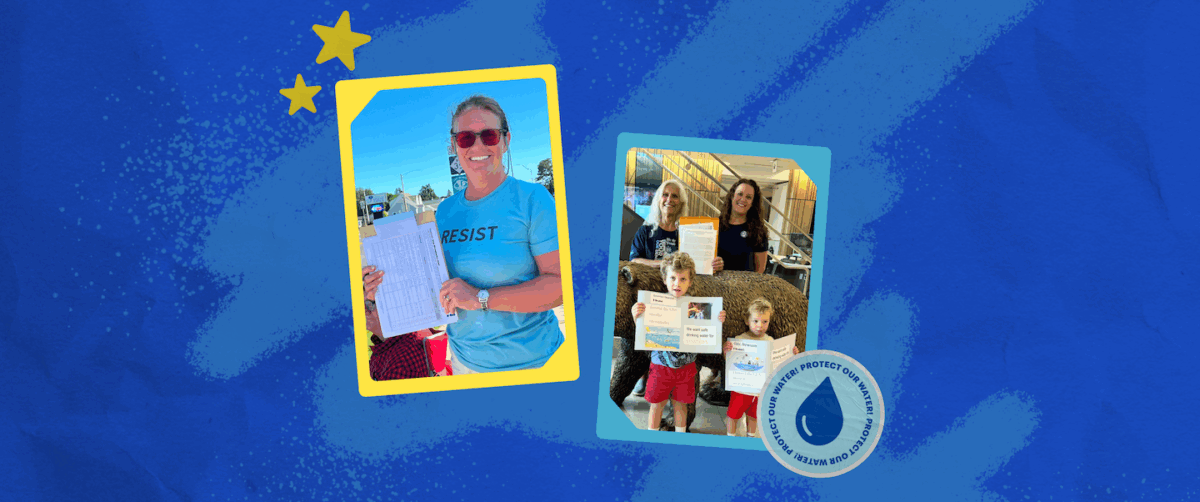
Dedicated volunteers nationwide are working to protect our water from microplastics. Late last year, we won a major step forward in this campaign! Here’s how we did it.
Editor’s Note: A version of this article originally appeared on the website of Food & Water Action (our affiliated organization) at an earlier date.
In November of last year, Food & Water Watch achieved an incredible win for protections against microplastics. With a novel organizing strategy powered by volunteers, we’ve increased pressure on the Environmental Protection Agency (EPA) to take action to monitor microplastics in our drinking water.
These tiny bits of plastic pose a massive threat to public health nationwide, and with the relentless work of our volunteers, we’re one giant step closer to meaningful protections. Here’s how we did it.
Our Strategy to Kickstart Action on Microplastics
Microplastics are everywhere. They’re in our food, our air, and our water. And as science advances, the clearer it is that microplastic pollution may cause enormous harm to our health when we ingest them.
Drinking water is a major route that microplastics take into our bodies. Each year, we could be ingesting 4,000 microplastic particles or more through tap water. And bottled water is even worse.
Given the magnitude of this threat, we knew we couldn’t wait on federal regulators. So we filed a petition to the EPA to start monitoring microplastic contamination in public drinking water. Learning more about the scale of the problem in our drinking water is the first step to passing strong protections.
We identified a little-known provision of the Safe Drinking Water Act that says if seven state governors file a petition for contaminant monitoring, the EPA must comply or identify other more concerning contaminants that require monitoring instead.
So after we filed our petition in December 2024, we began working with a dedicated community of volunteers to pressure governors to send their own petition. A year later, our work paid off. On November 26, seven state governors submitted their own petition!
This victory belongs to thousands of supporters and hundreds of volunteers who worked tirelessly on this fight.
Growing Awareness and Energy in Our Communities
We know this is a winning issue that resonates with a lot of folks as soon as they hear about it. “I just started by talking to anybody I thought would be interested in working on this team,” said Katie, Michigan volunteer leader. “We got a lot of letters to the editor submitted, we collected a lot of petition signatures, made a lot of calls to the governor, and asked friends to call in, too.”
Publishing letters to the editor in local newspapers is a great way to raise awareness, as well as bring issues to the attention of elected officials and their staff.
Volunteer team members also hosted screenings of films that show the breadth and dangers of this microplastics crisis. In Pennsylvania, a microplastics team leader held a screening of “Single Use Planet” for dozens of community members. In Ely, Minnesota, volunteers helped organize a screening of “Plastic People” with local organizations.
Sharing the science and the stakes with as many people as possible was a key starting point to build the power of this campaign.
Amassing Widespread Public Pressure
Volunteers worked on several tactics to show the power and strength in numbers behind our campaign. One way they did that was by delivering letters in person to Governors’ offices.
In October, California volunteer Giovanna brought a letter from 25 state organizations with thousands of petition signatures to Governor Newsom’s office in Sacramento. She drove three hours from Santa Cruz to deliver this letter with her daughter and grandchildren.
“We really did feel like we had done a good thing, a valuable thing, for our state,” Giovanna said. “And this has been a learning experience in strategic communication. It started the wheels turning for me locally, to see how we can reach out to local elected officials to partner with us.”
These petition signatures don’t come from nowhere — they take hard work. Volunteers have taken petitions to farmers’ markets and rallies, collecting hundreds through face-to-face conversations in their community.
They also built the numbers and strength of the campaign through phone-banking and working with other organizations. They drove in over 500 calls to Governors’ offices across the country and connected with hundreds of organizations across 11 states that signed onto letters in support of this campaign.
Speaking with Decision Makers One-on-One
All the pressure and buzz we create around an issue make conversations that we have with elected officials and their staff even more powerful.
In New Jersey, volunteer leader Paula got the chance to ask Governor Murphy directly about microplastics on the radio. A fellow volunteer in New York put her in touch with a radio host of an “Ask Governor Murphy” program.
“I explained to the Governor the importance of this petition and asked if he would sign it,” said Paula. “And he said he would have the head of the Department of Environmental Protection (DEP) contact me. I wrote to that DEP person every day after that. The next day, the deputy commissioner called me, and before we knew it, we received the press release announcing the seven governors’ petition!”
This was only possible thanks to the relationships that Paula and the team built with the media, and with Paula’s persistence in getting a response from the DEP.
Volunteers also worked to lobby their elected officials directly in one-on-one meetings. In Michigan, Katie’s hard work resulted in a meeting with Governor Whitmer’s staff. “In November, I was in the state capitol for a microplastics education day, and so while there, I got legislators to sign onto a letter encouraging the governor to do this,” she remembers.
“We had a meeting with Governor Whitmer’s environmental policy staffer, and he seemed really interested. All those pressure points got our campaign on her radar. So when the New Jersey Governor approached her, she knew exactly what he was talking about!”
This was the result of months of organizing, spreading awareness, and building relationships with elected officials and their staff. And thanks to this work, Whitmer was one of the seven governors to submit a petition to the EPA!
Join Our Fight For Protections Against Microplastics!
With the chaos and destruction occurring at the federal level, it’s understandable to feel hopeless. But our victory shows there’s power to be found in strategic organizing and coming together!
“I know with this work that I’m not doing this by myself, and I’m not the only one who cares about this; I’m not the only one who can do it, either,” Giovanna said. “I can step out and take a rest, know that they’re still going strong, and then step back in.” When it comes to environmental issues, as Giovanna put it, “We’re in this for the long haul,” and the way we win is by working with and depending on each other.
This victory is an incredible testament to our ability to win important strides for our communities. Everyone deserves clean water they can trust; to live healthy lives without fearing what they drink. We’ll continue to work toward that vision of clean water for all.
Now, the EPA must do the right thing — it must grant our petition and that of the seven governors, and finally start monitoring microplastics. This is an essential first step to protecting water and health for everyone.
Tell the EPA: Monitor for Microplastics!
Enjoyed this article?
Sign up for updates.
TO TOP