


How Corporations Are Attacking State and Local Protections


Published Jan 14, 2026
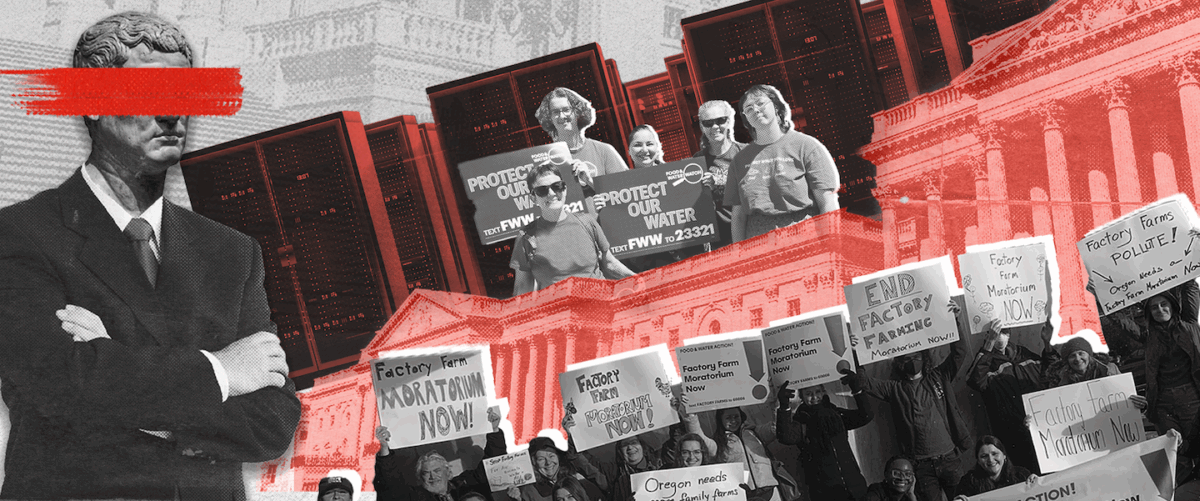
Those closest to polluting facilities should have a say in laws to protect them. Efforts from corporations and federal leaders aim to take that away.
No one is better suited to make decisions that affect local communities than the people who actually live there. But federal lawmakers, supported by corporate giants, are threatening local and state governments’ ability to pass protections for their own communities.
Local and state laws can be powerful tools to protect our public health, drinking water, and quality of life. In many cases, they go above and beyond federal protections.
However, stronger protections stand in the way of corporate profits. Across many different industries, corporations and their cronies in Congress are pushing legislation to preempt, or block, state and local laws more protective than federal law. On everything from factory farms to data centers, this promises more pollution, more corporate abuses, and less local democracy.
Fighting preemption is about protecting our health and the environment, but it’s also about our autonomy and input in decisions that directly affect us. Here are four ways we’re opposing preemption efforts to defend state and local protections.
1. Protecting Communities from Hazardous Carbon Pipelines
As Big Oil expands its carbon capture and storage boondoggle, companies are building more hazardous pipelines carrying carbon dioxide across the country. Accidents with these pipelines can create mass poisoning events in communities, but they’re incredibly underregulated.
Current rules around hazardous pipelines give the federal Pipeline and Hazardous Materials Safety Administration control over safety standards. But these standards are wholly inadequate, and state and local governments can’t pass stronger ones to protect their communities. They can’t even compel pipeline companies to share safety information to inform emergency planning.
That’s why we’re fighting for changes to the Pipeline Safety Act that would stop pipeline companies from hiding critical safety information from first responders. We’re also pushing for measures to prevent companies from building these dangerous pipelines near sensitive buildings like hospitals, schools, and homes.
So far, we’ve successfully kept dangerous preemption measures out of Trump’s Big Ugly Bill. Lawmakers attempted to include language that would have allowed federal regulators to force farmers and landowners to put carbon piplines on their land, overriding local protections. But thanks to our advocacy, lawmakers stripped this language from the final bill!
2. Preserving Protections Against Toxic Pesticides
In recent years, sick Americans have won billions of dollars in settlements for lawsuits alleging that toxic pesticides played a part in their illnesses. To defend their profits, pesticide corporations like Bayer have pushed “Cancer Gag Acts” in state legislatures across the country. But these bills, which would shield pesticide companies from such suits, have resoundingly failed in many states. In Iowa, we defeated a Cancer Gag Act by organizing a groundswell of grassroots pressure.
Now, Big Ag is doubling down on its efforts at the federal level using preemption. In 2023, its allies in Congress introduced the federal Cancer Gag Act: the Agricultural Labeling Uniformity Act. It would stop lawsuits based on the possible harms of a product if that product followed federal EPA labeling guidelines — which we know don’t give enough warning on long-term risks. Moreover, the bill would stop state and local governments from adding to or changing warning label requirements from the EPA’s guidelines.
This bill attacks state and local governments’ authority to warn their residents of pesticide use’s potential health harms. It makes inadequate labeling requirements the law of the land and takes a key avenue for justice away from those impacted.
As Bayer spends millions on lobbying and lawmakers try to slip Cancer Gag Act language in everything from the Farm Bill to an EPA spending bill, we’ll continue fighting to shut down Bayer’s terrible ploy for profit.
3. Defending Good Farming Practices from Big Ag
The EATS Act, now called the Food Security and Farm Protection Act, would preempt state and local laws that improve farming practices. Under EATS, if any state allows a “preharvest” practice in the production of an agricultural product, all states would have to allow that product to be sold. It doesn’t matter how hazardous, destructive, or inhumane to people or animals that practice is.
This “least common denominator” approach would effectively force states to drop safety, environmental, or health standards for agricultural products by forcing the sale of all animal products, no matter how unsustainable or inhumane. For example, if one state allows egg hens to be raised in deplorable conditions, other states couldn’t outlaw the sale of those eggs in the state.
EATS is a direct threat to the ability of local governments to protect our health, consumers, workers, farmers, and animals. They should be able to enact stronger protections their residents want and need.
Since this bill was introduced, Big Ag has worked with members of Congress to slip similar language into all sorts of other legislation, including the Farm Bill, Trump’s Big Ugly Bill, and the spending bill currently in negotiation. But so far, our advocacy has kept EATS from passing. We’ll keep blocking this draconian and dangerous bill in any form it may take.
4. Stopping Big Tech’s Energy-Hungry Data Centers
Recent months have seen the growth of a powerful grassroots movement against data centers for artificial intelligence (AI). These massive warehouses packed with supercomputers are powering Big Tech’s AI boom. They’re also guzzling our drinking water, entrenching polluting dirty energy, and raising our power bills skyward.
Many local and state governments are starting to take notice. But Trump, friend to Big Tech billionaires, is working to thwart regulations. His recent executive order sets out the administration’s policy toward AI — as little regulation as possible — while establishing mechanisms to pressure states to toe the line.
While the executive order doesn’t expressly go after data center regulations, it does build steam behind deregulating the industry that’s building them. It also threatens state and local governments’ ability to protect their residents from this rapidly advancing, destabilizing technology.
While we fight the implementation of this executive order, we’re not letting it deter our work against data centers. Communities across the country have made it clear — they don’t want data centers in their backyards. State and local governments must be able to listen to their residents and enact protections.
Tell Congress: REJECT efforts to steamroll local regulations to promote unchecked AI data center expansion!
We’re Fighting Preemption for Our Food, Water, and Climate
Preemption efforts like these are clear for what they are: attempts to strip protections from communities and clear the way for more corporate profits. With preemption, corporations get more powerful, their cronies in Congress protect them from oversight, and elected officials closest to their constituents get bypassed.
Those who live at the fenceline of a data center, a factory farm, a pesticide-drenched field, or a carbon pipeline deserve to have a say in laws affecting them. When federal policies fail to actually protect us, state and local governments must have the ability to pass stronger laws. Fighting these preemption efforts is key to defending our food, water, and climate from corporate power.
Enjoyed this article?
Sign up for updates.
TO TOP