


Be Rich or Don’t Eat: The Cruelty of Trump’s Food Policies

Published Dec 9, 2025
Trump’s policies are raising food prices and taking food assistance from families while handing more power to food corporations. Here’s how we’re fighting back.
For many, winter is a time for joy, gratitude, time with loved ones, and shared meals. But as prices rise in grocery stores nationwide, more families are going hungry instead of enjoying the holidays. And this is no accident. It’s the result of policy choices that put corporations first and push food out of reach for more and more people. Trump and his allies are making things worse.
At our November Livable Future LIVE!, we sat down with Food & Water Watch experts Amanda Starbuck and Rebecca Wolf, as well as Sudeshna Das Menezes, founder of Henrico Community Food Bank, to talk about the policy roots of our food and affordability crises and what we can do about them.
How Food Got This Expensive: Corporate Greed
We’ve all seen food prices skyrocket over the past few years. Price-gouging ran rampant during the pandemic, and corporations have continued to use crises to rob us.
Cal-Maine, the country’s largest egg producer, used bird flu as cover to hike prices. As Food & Water Watch Research Director Amanda Starbuck explained, we found that Cal-Maine’s profits grew sevenfold in a single year, before the virus even reached its flocks. The company took in $1 billion in windfall profits.
The groundwork for such egregious corporate greed was laid way earlier, though. For decades, the U.S. has made it easier for corporations to get bigger and more powerful. While we have laws on the books to stop this, federal regulators have been asleep at the wheel.
As a result, for instance, grocery giants like Walmart and Kroger have come to dominate their industry. This has given them more power to dictate things like prices and employee pay.
Walmart paid its CEO $27 million in its 2025 fiscal year, 930 times more than the median employee income. Meanwhile, the company’s workers regularly rely on food and healthcare programs because Walmart doesn’t pay them a livable wage.
This concentration isn’t just a problem in the grocery industry. “Every step along the food chain, from the seeds and machinery that farmers rely on, to the slaughterhouses and supermarkets, is in the hands of fewer and fewer corporations,” said Amanda.
“A handful of giant corporations stand between the 330 million eaters in the U.S. and the 2 million farmers producing our food,” she continued. “When only a few companies are in control of the industry, there is less competition. And less competition can mean poorer service, higher prices, and fewer choices.”
Trump’s Policies Favor Food Corporations Over People
As corporate greed sends prices soaring, Trump has only made matters worse. His deregulatory agenda is opening the door for more corporate wrongdoing. His Big Ugly Bill passed billions in tax breaks for corporations, which will only allow the food giants to grow their profits and power.
Meanwhile, Trump’s reckless tariffs are driving up food prices, without bringing any of the benefits to U.S. farmers and growers that smart tariff policies can bring.
Recently, we looked at the price changes of many holiday staples such as turkey, cranberry sauce, and potatoes, and found their prices far outpaced inflation (contrary to the administration’s bogus claims).
There’s no doubt about it. Trump is utterly failing to fulfill his campaign promises of lowering food costs. In fact, he’s doing the exact opposite and propping up corporate profits instead.
How Trump and His Allies Have Weaponized Hunger
With runaway food prices, federal programs that ensure families can eat are more important than ever. Yet Trump has been working hard to dismantle them.
The main source of federal food assistance, the Supplemental Nutrition Assistance Program (SNAP), feeds 40 million people. Another source, the Women, Infants, and Children (WIC) program, supports almost 7 million women and children.
Krissy Kasserman, Food & Water Watch Factory Farm Organizing Director, recalled how WIC benefits had helped her feed her daughter. At the time, Krissy was a single mom in college and working full-time.
“I really do credit this program with getting her such a solid start in life and helping me finish my degree, which has allowed me to get to where I am,” Krissy told us. “There are a lot of other kids out there who are in the same boat that my daughter was in. They have parents who go to work all day, every day, but don’t earn enough to pay the bills and to put food on the table.”
Outrageously, Trump’s Big Ugly Bill slashed funding for SNAP, cutting assistance for 5 million people, including 800,000 children. This is the biggest cut in American history.
To make matters worse, the recent Congressional spending battle and government shutdown threatened WIC funding while Trump refused to use emergency funding to keep SNAP going. This threatened to take food away from millions of people nationwide.
“The Trump administration used SNAP recipients as a political pawn, making them choose between meals, medicine, rent, and food, all while the USDA could have just funded the program,” said Rebecca Wolf, Food & Water Watch Senior Food Policy Analyst.
Food Is a Need and a Right, Not a Luxury
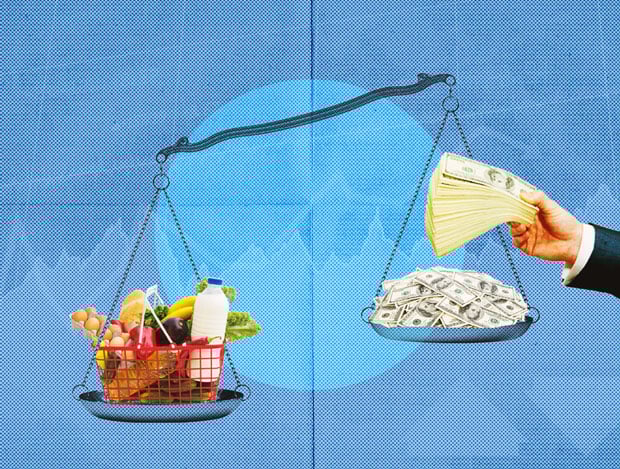
Trump’s policies are splitting the American population into two. Those at the very top, including food corporation executives, are hoarding even greater wealth and power. Those at the bottom can’t even afford to put food on the table and can’t depend on their government for support.
The message is clear: “Be Rich or Don’t Eat.”
For Henrico Community Food Bank, SNAP cuts brought a whole new level of need. Its founder, Sudeshna Das Menezes, saw the small organization’s work spike by a hundred new families. This came on top of the steadily growing need that the Food Bank has seen since she founded it five years ago.
For many, food assistance, whether it’s from a food bank or from the federal government, is crucial. For example, as Sudeshna explained, “A lot of our households are seniors, living on very, very fixed incomes, with not a whole lot of leeway to make things any different. They’re choosing between medication; they’re choosing between food.”
One of the biggest changes the Big Ugly Bill made to SNAP is raising work requirements to access benefits. But this adds a whole level of barriers to keep people away from a basic right and necessity: food.
Despite what Trump’s policy purports, no one — not children, not the elderly, not disabled people, no one — should have to jump through hoops to eat, or be denied food entirely.
How You Can Make a Difference in Your Community
Despite the challenges we face, we have huge opportunities to make a difference. One is right in our communities, by supporting organizations like Henrico Community Food Bank.
“Check in with your local feet-on-the-ground organizations,” Sudeshna recommended. “Reach out to them to ask what they need at that particular moment, because the needs change on a weekly basis, sometimes on a daily basis.”
We also need to fight Trump’s draconian policies and push for system-wide policy change to make our food system fairer and more affordable. Food & Water Watch is doing both.
Earlier this year, Trump’s allies in Congress aimed to slash a school meal program that fed 20 million students through the Big Ugly Bill. We fought back, and lawmakers dropped their cuts from the final bill.
In Congress’s most recent spending package, our volunteers helped stop another bad provision that would stop states and localities from having their own animal welfare laws. This would have been a huge handout to Big Ag corporations that profit from deregulation.
Going forward, Food & Water Watch is working with groups across the food movement and stopping Trump’s cuts to federal programs. We’re also planning for the long haul, pressuring Congress members to pass the food policy we need to end corporate capture and win a fair food system.
“Despite this really, really challenging administration, we’re still scheming and dreaming and organizing and fighting back with all of you,” Rebecca said. Our victories so far show that we have the power to make a huge difference in fighting the worst of Trump’s abuses and to defend safe, affordable food for all.
Start here: Sign our petition calling on Congress to stop the mergers that help Big Ag corporations get bigger!
Watch the Full Conversation with Rebecca, Amanda, and Sudeshna!
Check out the event recording to learn more about:
- What’s next for SNAP and WIC after the shutdown,
- How food corporations swallow or out-compete their competition,
- How Congress’s newest spending package impacts farmers and our food system,
- and more!
Check Out Resources Shared at the Event
- Click here to find the food bank nearest to you.
- To learn more about Henrico Community Food Bank, visit their website or email [email protected]
- Check out our Economic Cost of Food Monopolies series, including:
- Trump is misusing tariffs. Read more in “How Trump’s Tariffs Hurt Farmers and Families.”
- Trump’s anti-immigrant policies are unconscionable, racist, and violent. They are also harming our food system. Read more in “How Trump’s Immigration Policies are Harming Our Food System.”
- Join us for our next Livable Future LIVE on Wednesday, December 10, 7-8 pm ET, Stories From the Front Lines: Building Community & Resistance. RSVP here!
- Our first Livable Future LIVE of 2026 will be Wenonah’s Book of the Year: an Author Talk with Judith Enck, The Problem with Plastic, on January 21, 7-8 p.m. ET. Save your spot!
- We have various volunteer teams and events happening across the country — Check out opportunities near you.
- Your generosity helps fight for a livable future for all! Donate to Food & Water Watch!
Enjoyed this article?
Sign up for updates.
TO TOP