



Monsanto — Er, Bayer — Will End Consumer Glyphosate Sales. It’s Not Enough.

Published Sep 1, 2021
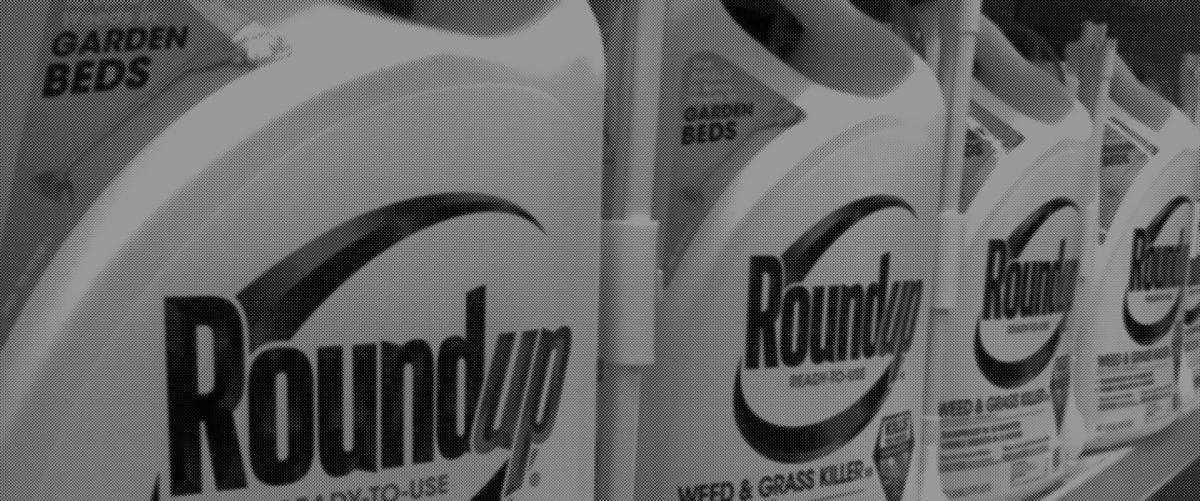
A fierce battle over the truth of glyphosate’s cancer-causing effects has waged for years as Bayer (formerly Monsanto) tried to influence the science and sway the EPA. We’ve pushed to reveal their con-job for years. Now a deluge of lawsuits from cancer-stricken consumers has the corporation taking glyphosate out of its consumer-level product lineup.
Over 100,000 legal claims from consumers finally prompted Bayer to announce last month that it will remove glyphosate from its residential-use weed killers, including Roundup, beginning in 2023 (newsflash: still not soon enough). Bayer (which now owns Monsanto) said it will replace glyphosate with a different alternative.
In 2015, the World Health Organization classified glyphosate as a probable carcinogen but Monsanto — as the company was then known — initiated a PR blitz to contradict that finding. This included paying scientists to conduct an “independent” review of glyphosate to give the toxic chemical a bill of good health, and wooing officials from the Environmental Protection Agency (EPA) tasked with reviewing the pesticide’s cancer effects. This interference heavily muddied the waters and likely influenced EPA to find that glyphosate didn’t pose a cancer risk to humans.
But what a government agency that is supposed to protect us didn’t do, and what a corporation hellbent on protecting its profits wouldn’t proactively do, thousands of costly lawsuits finally accomplished. Still, this voluntary removal of glyphosate from residential-use products doesn’t go nearly far enough, and we won’t rest until the EPA bans glyphosate altogether.
Here’s a brief history of how Monsanto/Bayer has manipulated science and government agencies in order to keep selling their deadly money-maker.
Court Documents Revealed Monsanto’s Playbook To Obscure Roundup’s Cancer Link
In March of 2017, a federal judge unsealed court documents that detailed the lengths Monsanto went to twist the public narrative and EPA review in order to continue selling glyphosate under the claim that it was safe.
For instance, an internal PowerPoint outlines Monsanto’s strategy for countering the damning classification as a probable carcinogen. One suggestion was to publish a paper analyzing the animal data that the WHO used in its cancer assessment, noting that the “majority of writing can be done by Monsanto, keeping OS$ [costs] down.” It suggested recruiting external scientists like Helmut Greim, who co-authored a Monsanto-funded analysis the following year that — unsurprisingly — concluded that glyphosate is not carcinogenic to laboratory animals.
They also ghost-wrote papers and paid “independent” scientists to put their names on them, and stopped working with scientists who wouldn’t present findings the way they instructed.
EPA’s framework for assessing the public health risk posed by pesticides like Roundup relies heavily on industry-funded science, which makes the process vulnerable to this kind of predetermined conclusion-driven approach. It is also why advocates worry that glyphosate’s replacement could have its own health risks, but still be given the green light by EPA.
Injured Users Of Roundup And Advocacy Groups Like Food & Water Watch Took Action When EPA Did Not
For years while we’ve been waiting for EPA to do the scientifically sound thing by banning glyphosate, we also sounded the alarm ourselves, publishing research and educating citizens about its danger.
We compiled data that showed glyphosate:
- Is an endocrine disruptor, meaning it interferes with hormone levels, even when glyphosate residue on foods is present below allowable thresholds;
- Is probably carcinogenic, linked strongly to non-Hodgkins lymphoma, according to the World Health Organization’s International Agency for Research on Cancer — whose assessment has underpinned many of the lawsuits filed against Monsanto/Bayer;
- May contribute to antibiotic resistance in certain bacteria;
- May be linked to reproductive issues and birth defects; and
- Is widely present in our food — meaning this voluntary suspension of consumer-level Roundup sales does not go far enough and we still need EPA to act.
It’s Time For EPA To Do Its Job To Protect The Public And Ban Glyphosate
Bayer’s press release announcing the move to eventually pull glyphosate from their products confirms that they have no plans to stop selling it for large-scale agricultural uses — which is the path by which it ends up in so many of the foods in our grocery stores:
This move is being made exclusively to manage litigation risk and not because of any safety concerns. As the vast majority of claims in the litigation come from Lawn & Garden market users, this action largely eliminates the primary source of future claims beyond an assumed latency period. There will be no change in the availability of the company’s glyphosate formulations in the U.S. professional and agricultural markets.
This statement implies that Bayer/Monsanto has no qualms about continuing to cause harm to consumers, as long as they feel adequately shielded from liability for that harm.
This is why we can’t rely on corporations to do what’s right, and we must insist the EPA do its job and ban glyphosate everywhere, for good.
Tell the EPA to ban Roundup everywhere!
Enjoyed this article?
Sign up for updates.
TO TOP